Beyond Healthcare: The Social Determinants of Health Outcomes in Nigeria
By Helen Ohunene Otailku, B.Sc. Health Education, Freelance Health Writer. Medically reviewed by the DLHA Editorial Team.
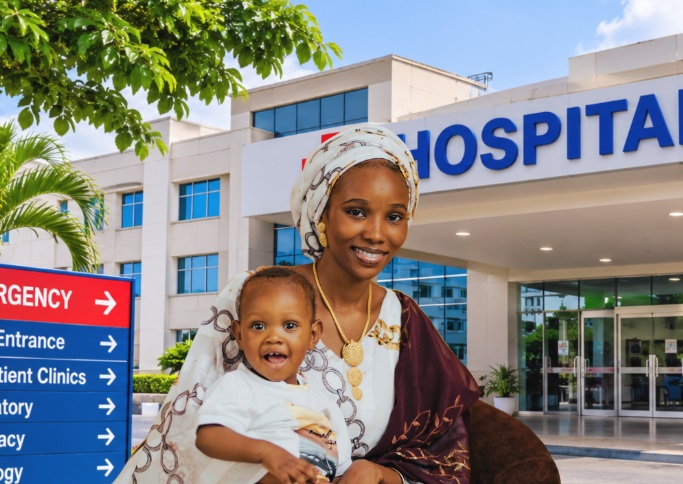
An elegantly dressed Nigerian mother holding her son outside a hospital. Image Credit: Canva. Click on image to enlarge.
People living in Nigeria still struggle with poor health outcomes despite thousands of healthcare facilities (hospitals, clinics, and primary health centers). For example, 29% of all global maternal deaths occur in Nigeria, as 1,047 pregnancy-related deaths occur for every 100,000 live babies born [1]. Also, about 110 out of every 1,000 children die before their fifth birthday [2]. These are concerning statistics that demand corrective and collective action.
Beyond health facilities, structural and intermediary determinants contribute in shaping peoples’ health. Collectively, these determinants are referred to as Social Determinants of Health (SDOH).
The World Health Organization (WHO) commission on Social Determinants of Health (SDPH) distinguishes between structural determinants, such as income, education, gender and governance, and intermediary determinants, such as living conditions, food availability and access to care [3]. Together they decide how health is distributed across a population.
Since health is determined by factors beyond healthcare, improving it should be the sole responsibility of everyone; the public, government, and all other health stakeholders.
This article aims to raise awareness and inform at a basic level on the various types of social determinants of health, how they shape health and how everyone has a role to play in working together to improve health outcomes for all in Nigeria
WHO defines the social determinants of health (SDOH) - collectively listed below, as “the circumstances in which people are born, grow up, live, work and age, and the systems put in place to deal with illness [3].
These determinants include the following factors:
Closing Nigeria's health gaps therefore requires action well beyond the confines of health facilities.
For example, a child who drinks contaminated water may be treated for diarrhoea in the hospital but with dependence on the same water source falls sick once again.
The hospital treats the consequence, while the ‘social determinants’ keep causing it. This is why health systems alone cannot reverse poor health outcomes, however well-funded they are.

African young woman holding a wallet with her other hand on her head. She looks stressed, surprised, and frustrated.. Image credit: Magnific. Click on image to enlarge.
The National Bureau of Statistics estimates that 63% of Nigerians, about 133 million people, are multi-dimensionally poor. This measure captures deprivation in health, education, living standards and work, not only low income.
Poverty shapes how people use health services. Out-of-pocket payments account for roughly 70% of total health spending [4], and only a small share of Nigerians have health insurance. A single illness can trigger catastrophic health expenditure, forcing families to sell assets, borrow or cut spending on food and schooling.
Many people delay care until a condition becomes worse. Others turn first to patent medicine vendors or traditional healers because they are cheaper and closer. Late presentation raises the cost of treatment and the cycle deepens poverty further.
Related: Babies’ Brain Development is Poor in Households with Social and Financial Challenges, Study says

Portrait of a pregnant African woman sitting on a couch in a hospital clinic waiting for a health checkup. Image credit: Magnific. Click on image to enlarge.
Maternal education is one of the strongest predictors of child survival. Nigerian survey data show that under-five mortality falls as the mother's level of education rises [5]. Educated mothers are more likely to attend antenatal care, deliver with skilled attendants, vaccinate their children and recognise danger signs early.
The girl-child education gap undermines this protection. More than 10 million Nigerian children are out of school, and girls in the north are disproportionately affected. Girls who leave school early tend to marry and bear children earlier, which raises maternal and neonatal risk.
Health literacy matters as well. Understanding a prescription, an immunisation schedule or a warning sign determines whether health information leads to action. When people are not or less educated, misinformation thrives and this impacts the state of health.
Related: Education Affects Healthcare Access and Preventable Deaths, Study Shows
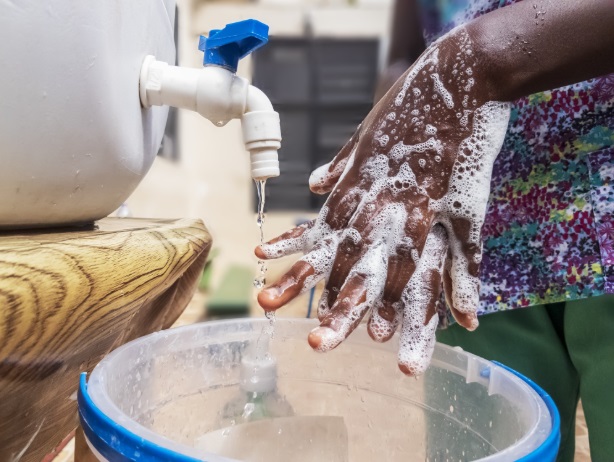
Close up of a hand being washed with soap and water from a container in demonstrating attention to personal hygiene. Image credit: Magnific Click on image to enlarge.
Tens of millions of Nigerians still practise open defecation which leads to diarrhoeal disease, a major cause of death in children under five. Unsafe water, poor sanitation, and inadequate hygiene remain leading causes of preventable illness. Cholera outbreaks show the consequences. In 2021 alone, the Nigeria Centre for Disease Control recorded more than 111,106 suspected cases and about 3,604 deaths.
Overcrowded housing carries its own risks because it spreads tuberculosis and acute respiratory infections. Poor ventilation and indoor cooking smoke can lead to the damage of the lungs.
Related: Hiding in Plain Sight: The Toxic Truth about Where We Live
4. Food Security and Nutrition
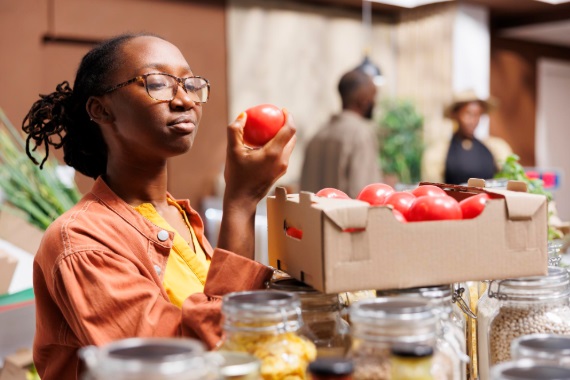
A black woman holding a tomato with a carton on top of glass cereal jars. Image credit: Magnific. Click on image to enlarge.
Approximately 40% of Nigerian children under five are stunted [6]. Stunting due to malnourishment hinders physical growth and brain development, and its effects may even last into adulthood.
The rising cost of living has made the problem worse. Food inflation has pushed nutritious foods such as fish, eggs, fruit and vegetables out of reach for many households, which then rely on cheaper, starchy staples.
Conflict-driven displacement adds to the food burden. Families from Borno, Adamawa, Yobe, Kaduna, Sokoto, Katsina, Benue and Niger who flee farming communities lose their harvests and livelihoods, and displaced children face a high risk of acute malnutrition [7].
Related: Study: Fruits and Vegetables Help Lower Blood Pressure and Heart Risks
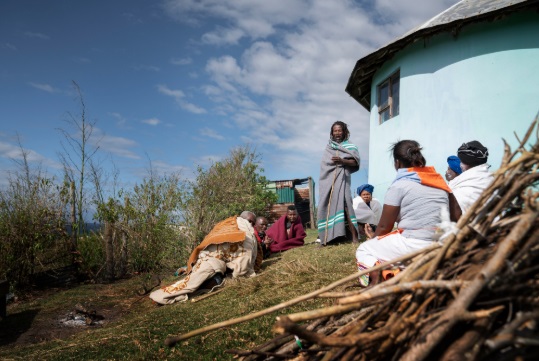
Affected conflict-displaced families in a safety camp. Image credit: Magnific. Click on image to enlarge.
Health outcomes in Nigeria differ sharply by gender, geographical location, and conflict. Gender norms that limit women's decision-making, mobility and access to money creates barriers to seeking healthcare which determines the state of their health.
Northern states record higher child and maternal mortality and lower use of skilled birth attendants than southern states [8]. Rural communities often lack nearby facilities, trained staff transport. Insecurity compounds these problems.
Violence forces health facilities to close, drives health workers away, and disrupts immunisation and outreach programmes.
Related: Four Social Factors That Influence Your Lifespan
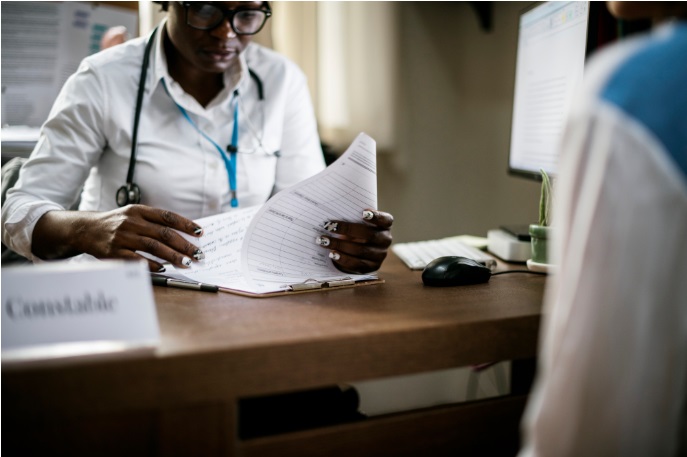
Partial image of an unidentifiable African male meeting a doctor in a clinic room. Image credit: Magnific. Click on image to enlarge.
Policy decides whether the other determinants are addressed or ignored.
“The Abuja Declaration of 2001 committed African governments to allocate 15% of their budgets to health, yet Nigeria has consistently fallen short of this target [9].”
Despite the declaration, continuing underfunding leaves primary health care centres -the facilities closest to communities, short of staff, equipment and medicines.

A black female physician chatting with a young African male in the waiting area of a clinic. Image credit: Magnific. Click on image to enlarge.
People may not use health facilities available to them when they are inaccessible because access depends on availability, affordability, distance and quality of healthcare being provided. For example, only about 43% of births are attended by a skilled provider, and the share is far lower among rural and poorer women [10].
Many primary health care centres are not fully functional, with limited trained staff, essential medicines or reliable power. Nigeria has about four doctors per 10,000 people, well below the WHO threshold for skilled health workers, and the emigration of doctors and nurses to the city or abroad widens this gap [10].
Distance and cost of treatment add to the lack of access to healthcare. Families may travel for hours, often on poor roads, and pay for transport on top of fees. Fear of poor-quality care, long waits and disrespectful patient treatment also discourage people from seeking help. Many therefore choose unregulated providers with conditions that could be treated early becoming emergencies.
Related: Investing in Care: Closing Sub-Saharan Africa’s Healthcare Workforce Gap
The following collaborative strategies between the government, individuals and other diverse healthcare sector can help improve the health outcomes of Nigerians beyond rescue to prevention.
Health is determined in homes, schools and communities, not only in hospitals. Beyond genes, social determinants of health like poverty, limited education, unsafe water, poor housing, hunger and insecurity as well as incoherent health policies shape who becomes ill long before anyone reaches a healthcare facility.
If the different levels of Nigeria’s health stakeholders recognize and address these determinants, its public health managers and primary care providers can finally focus on prevention and promotive care outcomes rather than on “rescue” curative care the majority of the time.
1. Okafor M. One death every seven minutes: The world's worst country to give birth. [Internet]. June 2, 2025. BBC. [Accessed November 3, 2026]. Available from here.
2. Shuaibu F, Nigeria’s under-5 deaths drop – Survey. [Internet]. Daily Trust. Sat, 18 Oct 2025. [Accessed November 3, 2026]. Available from here.
3. World Health Organization. Social determinants of health: Key concepts. [Internet]. 7 May 2013. [Accessed November 3, 2026]. Available from here.
4. Adekunle W, Vincent O. Analysing the determinants of healthcare insurance uptake in Nigeria. BMC Health Serv Res. 2025;25:1310. doi:10.1186/s12913-025-13422-0, Available from here.
5. Madichie C, Lomas J, Siciliani L. The association of maternal education with access to maternal care and child mortality in Nigeria: A secondary data regression-based analysis. PLoS One. 2026;21(2):e0337367. doi:10.1371/journal.pone.0337367. Available from here.
6. Unicef Nigeria | Nutrition. [Internet, n.d.]. Accessed November 4, 2026. Available from here.
7. Alagbe, J. In northern Nigeria, resettled farmers are giving back to tackle malnutrition. [Internet]. 30 July 2024. Gavi. VaccineWork. [Accessed November 4, 2026] Available from here.
8. Ebinim, H., Akpiroroh, E., Ajayi, M., Sabbath, U. O., Jibril, J., Ehize, P., Isiaka, S., Kolawole, D., Nto, S., Unogu, C., Rauf, R., Atobatele, S., Sampson, S., Eugene, E., & Okagbue, H. (2026). Perceived barriers to maternal healthcare utilization: insights from skilled birth attendants in six high-burden states of northern Nigeria. BMC public health, 26(1), 2590. Available from here.
9. Adebisi MA, Ogunkola IO, Lucero-Prisno DE 3rd, et al. Persistent shortfalls in government health expenditure: a decade-long analysis of Abuja 15% target attainment across 52 African countries, 2014-2023. Trop Med Health. 2026;54(1):222.. doi:10.1186/s41182-026-01102. Available from here.
10. Dogbanya G. Maternal Mortality in Nigeria: Holding the Line in Uncertain Times. Ann Glob Health. 2025;91(1):16. doi:10.5334/aogh.4710. Available from here.
Related:
Four Social Factors That Influence Your Lifespan
The More Education You Have, The Longer You Live; Study Says
Published: November 15, 2026.
© 2026. Datelinehealth Africa Inc. All rights reserved.
Permission is given to copy, use, and share content freely for non-commercial purposes without alteration or modification and subject to source attribution.
DATELINEHEALTH AFRICA INC., is a digital publisher for informational and educational purposes and does not offer personal medical care and advice. If you have a medical problem needing routine or emergency attention, call your doctor or local emergency services immediately, or visit the nearest emergency room or the nearest hospital. You should consult your professional healthcare provider before starting any nutrition, diet, exercise, fitness, medical or wellness program mentioned or referenced in the DatelinehealthAfrica website. Click here for more disclaimer notice.