Breastfeeding Premature Babies: Practical Tips and Challenges
By Chinonso Cynthia Ukah, BNSc, RN, RM, RPHN. Freelance Health Writer. Medically reviewed by: Chiamaka Wisdom-Asotah, MBBS.
September 29, 2026
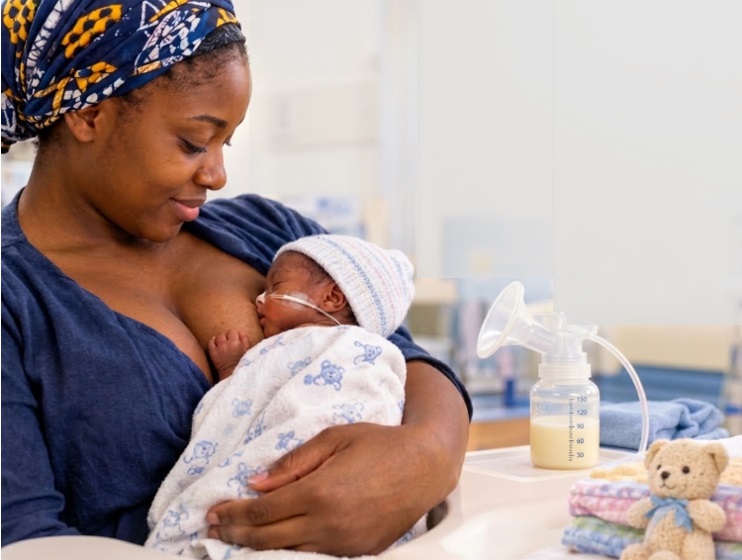
An African mother holding her premature baby next to a breast pump. Click on image to enlarge.
Breastfeeding a newborn baby is an important part of their survival. Immediately after birth, many babies are placed on their mother's breast, where they not only get nourishment but also comfort and warmth. But what happens when your baby is born too early?
What happens when your baby is taken from you to the special care baby unit (SCBU) or neonatal intensive care unit (NICU) because they are too small or too sick to breastfeed directly? How will your baby get your breast milk? And what happens to you when your breasts are still producing milk, but your baby isn't there to feed?
These are some of the challenges mothers of premature babies may face.
In this article, we'll look at the common challenges mothers may face when breastfeeding a premature baby and, most importantly, what you can do about them.
Prematurity is a term used to describe babies who are born before 37 completed weeks of pregnancy [1]. They are also called preterm babies or preemies, and they can be:
According to the World Health Organisation, prematurity is the leading cause of death among children aged 5 years and below. And, half of these babies born at or below 32 weeks die in low-income countries like Nigeria, Ghana, etc., due to lack of simple and affordable interventions like breastfeeding, amongst others [1].
Babies can be born premature for two main reasons [1]:
In any case, these babies may find it very difficult to breastfeed because their sucking and swallowing skills are not yet fully developed.
Breastfeeding simply means feeding a baby with breast milk. It becomes exclusive breastfeeding (EBF) when the baby is fed only breast milk for the first six months, without water or other foods. After six months, other foods are introduced while breastfeeding continues for up to 2 years and beyond.
Preterm babies have unique nutritional and developmental needs. Because they are born before they are fully developed, their nutritional requirements are higher than those of term babies, which is why breastfeeding is very important [2].
Breast milk provides premature babies with important nutrients and protective substances that support their growth and help protect them from infections and other complications. Some of the major benefits include [3]:
Before breastfeeding, premature babies are often given expressed breast milk (EBM). EBM is breast milk that has been removed from the breast by hand or with a breast pump and given to the baby using a suitable feeding method.
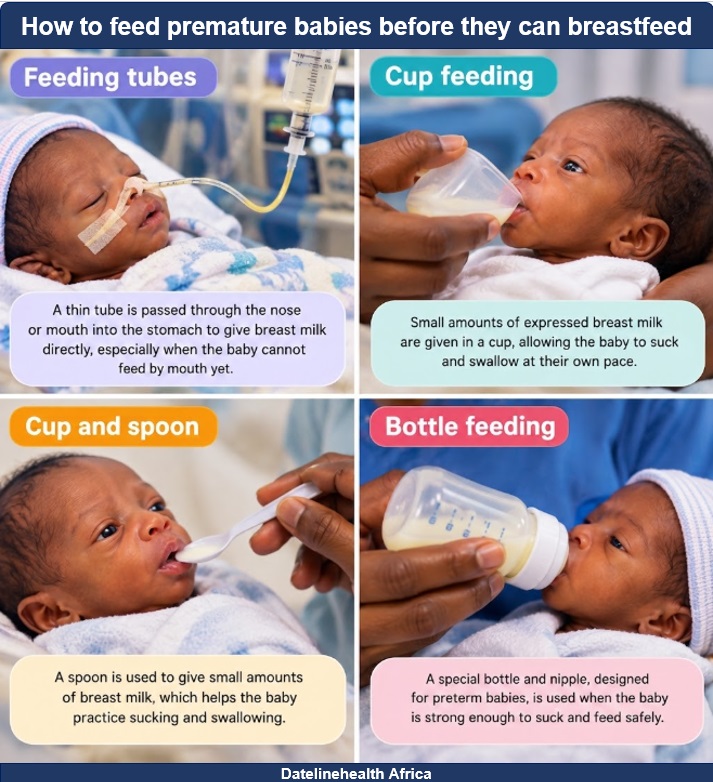
Image showing four ways expressed breast milk may be given to a preterm baby when direct breastfeeding is not yet possible. Click on image to enlarge.
Depending on the baby's maturity and ability to suck and swallow, EBM may be given through the following means:
A thin tube is passed through the baby's nose or mouth into the stomach. Expressed breast milk can then be given through the tube, especially when the baby is not yet able to suck and swallow effectively.
The baby is given expressed breast milk from a small cup. This may be used when the baby is able to take milk by mouth but is not yet ready to breastfeed directly.
Small amounts of expressed breast milk may be given using a cup and spoon. This is another way of providing milk while the baby develops the skills needed for direct breastfeeding.
Expressed breast milk may sometimes be given through a bottle. However, certain authors say it can be a risk factor to stopping breastfeeding early [4].
Unlike a baby born at term (38-40 weeks), premature babies may need to move between tube feeding, cup and spoon before finally feeding at the breasts due to the following reasons;
If you have a premature baby and want to continue giving them breast milk, here are some practical tips you can follow [8]:

A mother in a hospital bed expressing breast milk with a breast pump. Click on image to enlarge.
If you are separated from your premature baby after birth, start expressing your breast milk as soon as you are able to. If you are medically stable and strong enough, try to begin within the first 1–3 hours after giving birth. This helps you start building your milk supply while your baby may not yet be able to breastfeed directly.
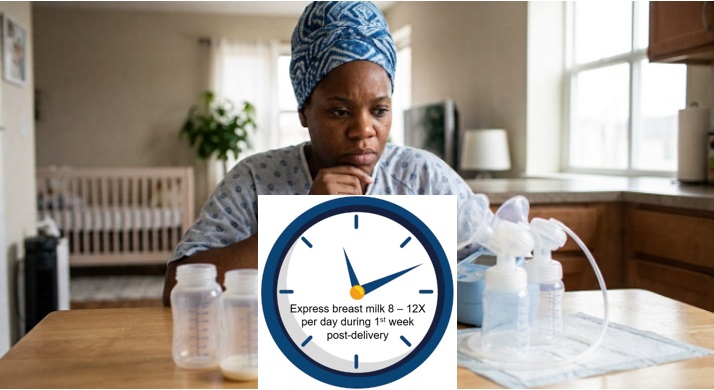
An African mother sitting at a table with a breast pump and breast milk collection bottles beside her. Click on image to enlarge.
Some mothers may not be able to express large amounts of milk especially in the first week of birth. This shouldn't discourage you from expressing. The more you express, the more milk you can produce with time. It is often recommended that you express up to 8 to 12 times per day in the first few weeks to aid milk supply.
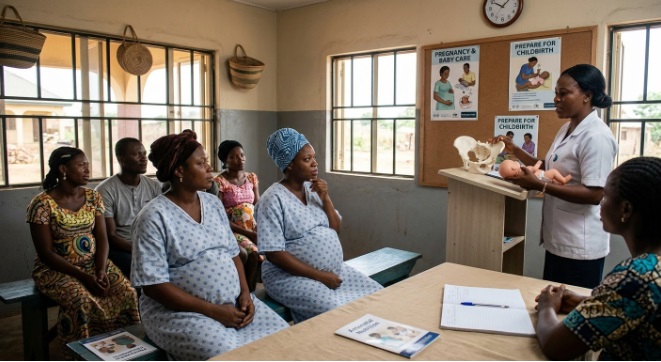
Pregnant women attending an antenatal class as a healthcare worker provides health education. Click on image to enlarge.
It is important that you attend your antenatal classes. Here, your healthcare provider can teach you strategies for expressing your breast milk more effectively, such as how to massage your breasts, how to use skin-to-skin contact, how often you should express and the best timing for expressing your milk.
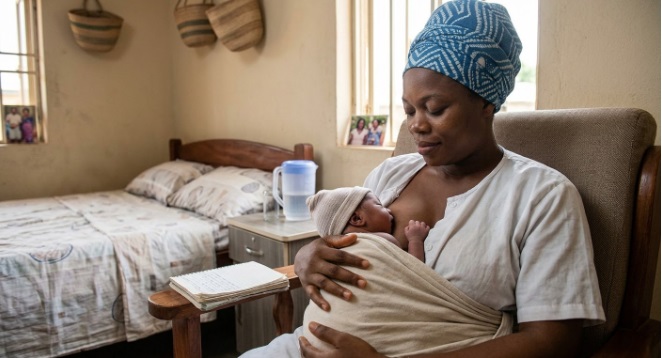
Mother holding her premature baby skin-to-skin against her chest at home. Click on image to enlarge.
Kangaroo Mother Care involves a combination of prolonged skin-to-skin contact between you and your baby, breastfeeding and bonding. This strategy has been recommended by the World Health Organisation to increase the rate of breastfeeding among premature babies and also babies with low birth weight.
.jpg)
A mother gently feeding her premature baby with a cup while holding the baby close to her chest. Click on image to enlarge.
Most preterm babies are still learning to breastfeed and may need an alternative feeding method while they develop the ability to suck, swallow and breathe effectively. Cups or spoons are often preferred to feeding bottles and teats for preterm babies who need alternative feeding. This is because bottle-feeding has been linked to early stoppage of breastfeeding compared to expressing breastmilk and feeding it to your baby [4].
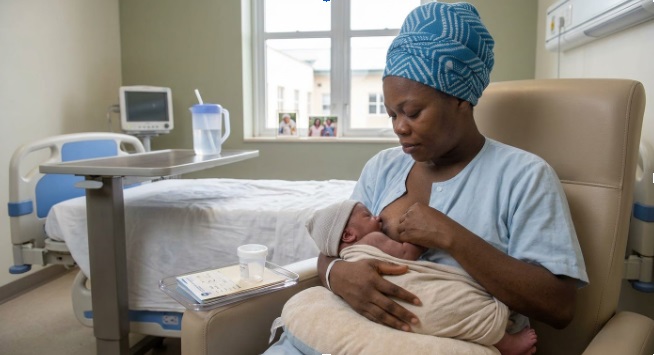
A mother breastfeeding her premature baby in a hospital room. Click on image to enlarge.
Once your baby is able to breastfeed effectively and there is no medical reason for additional feeds, aim to practise exclusive breastfeeding for the first six months. This means giving your baby only breast milk, without water or other foods and drinks [9].
Some of the challenges you may encounter as an African mother with a preterm infant include the following [10, 11].
Your baby may be separated from you in the first hours of life because they need to be stabilised. They may need immediate breathing support or other urgent medical care, making early initiation of breastfeeding almost impossible.
When your preemie becomes stable enough to breastfeed, you may also have challenges putting them to breast as;
Premature babies get tired quite easily and tend to sleep a lot. Even when they are able to latch and suck, they may not have enough strength or stamina to breastfeed for long [7].
Some mothers may experience difficulties when trying to express breast milk for their premature babies. This may be due to a lack of knowledge about how to express effectively, difficulty using a breast pump, or other personal reasons. This is why learning about breast milk expression during antenatal care and seeking help from healthcare providers when needed is important.
This usually happens on the 3rd to 5th day after you have had your baby. Your breasts become fuller, firmer and painful. Breast engorgement can become worse when:
6. Low Milk Supply
Some mothers may struggle with low breast milk supply after giving birth prematurely. Preterm birth is a risk factor for delayed lactogenesis stage II, the stage when milk production increases and becomes more abundant [4]. This can make it difficult to produce enough milk for your premature baby, especially in the early days after birth.
Breastfeeding a premature baby can come with challenges, especially when your baby needs to stay in the NICU or SCBU, cannot breastfeed directly, or you are struggling with milk expression. However, these challenges do not mean that you cannot provide breast milk for your baby. Starting milk expression early, expressing regularly, practising skin-to-skin contact and getting support from your healthcare provider can help you establish and maintain your milk supply while your baby develops the skills needed to breastfeed directly. Be patient with yourself and your baby, and remember that you do not have to figure it all out alone.
Give your baby time to develop the ability to coordinate sucking, swallowing and breathing. You can continue expressing your breast milk and giving it to your baby using the feeding method recommended for them until they are ready to breastfeed directly. You may also benefit from the support of your healthcare provider.
Your baby's weight gain, growth and feeding pattern are some of the best ways to know if they are getting enough milk. As they grow, regular wet and soiled diapers can also be a useful sign that they are feeding well.
This depends on your baby's gestational age, weight, health and ability to breastfeed. Some premature babies may need to feed more frequently or take longer breaks during feeds. Follow the feeding schedule given for your baby and watch for their feeding cues.
The amount depends on your baby's weight, gestational age, health and nutritional needs. Premature babies are usually given a specific amount of milk based on their body weight. So, don't compare the amount your baby takes with what another baby takes.
Before leaving the hospital, your healthcare provider will show you how to breastfeed, express your milk and give expressed milk if your baby is not yet breastfeeding effectively. If your baby still needs an alternative feeding method, continue using the method recommended for them until they can breastfeed directly.
Most babies start complementary foods at around 6 months while breastfeeding continues. For premature babies, however, the timing may depend on their corrected age and developmental readiness. Look for signs that your baby is ready rather than relying on age alone.
1. World Health Organization. Preterm birth [Internet]. Geneva: World Health Organization; 2023 May 10 [Cited 2026 Sep 12]. Available from here.
2. Tongo OO, Olwala MA, Talbert AW, Nabwera HM, Akindolire AE, Otieno W, et al. Enteral feeding practices for very preterm and very low birth weight infants in Nigeria and Kenya. Front Pediatr. 2022;10:892209. doi:10.3389/fped.2022.892209. Available from here.
3. Degaga GT, Sendo EG, Tesfaye T. Prevalence of exclusive breast milk feeding at discharge and associated factors among preterm neonates admitted to a neonatal intensive care unit in public hospitals, Addis Ababa, Ethiopia: a cross-sectional study. Pediatr Health Med Ther. 2020;11:21-28. doi:10.2147/PHMT.S215295. Available from here.
4. Kinoshita M, White MJ, Doolan A. Clinical assessment of breastfeeding in preterm infants. Eur J Clin Nutr. 2024;78(10):825-829. doi:10.1038/s41430-024-01471-3. Available from here.
5. Shandley S, Capilouto G, Tamilia E, Riley DM, Johnson YR, Papadelis C. Abnormal nutritive sucking as an indicator of neonatal brain injury. Front Pediatr. 2021;8:599633. doi:10.3389/fped.2020.599633. Available from here.
6. Scherman A, Wiedrick J, Lang WC, Rdesinski RE, Lapidus J, McEvoy C, et al. Quantification of nutritive sucking among preterm and full-term infants. Res Rep Neonatol. 2018;8:53-63. doi:10.2147/RRN.S165421. Available from here.
7. McLeish J, Aloysius A, Gale C, Quigley MA, Kurinczuk JJ, Alderdice F. What supports mothers of very preterm babies to start and continue breast milk feeding in neonatal units? A qualitative COM-B analysis of mothers’ experiences. BMC Pregnancy Childbirth. 2024. doi:10.1186/s12884-024-06910-4. PMID: 39506695. Available from here.
8. Cunha CMC, Lima EFA, Galvão DMPG, Brito APA, Fonseca LMM, Primo CC. Breastfeeding assistance for preterm and low birth weight infants: best practices implementation project. Rev Esc Enferm USP. 2024;58:e20230380. doi:10.1590/1980-220X-reeusp-2023-0380en. PMID: 38949512. Available from here.
9. World Health Organization. Early Essential Newborn Care [Internet]. Geneva: World Health Organization; 2022 Jul 22 [cited 2026 Sep 12]. Available from here.
10. Breastfeeding experience, barriers, and facilitators among mothers of vulnerable low birth weight infants in Amhara region, Ethiopia: a qualitative exploratory study. Int Breastfeed J. 2025;20:51. Available from here.
11. Russell JA, King R. The challenges of breastfeeding a late preterm or early term infant: Women's and clinician's perceptions of provision of antenatal information when considering early planned birth. Midwifery. 2025;143:104314. doi:10.1016/j.midw.2025.104314 Available from here.
Related:
7 Barriers to Exclusive Breastfeeding in Africa
14 Breastfeeding Challenges African Nursing Mothers Need To Know
10 Common Myths and Misinformation about Breastfeeding in Africa
6 Breastfeeding Tips for New African Moms
Make up, Nail Polish, Hair Dyes Can Be Harmful During Pregnancy and Breastfeeding
Breast Hygiene and Care During Breastfeeding: A Guide for African Women
Published: September 29, 2026
© 2026. Datelinehealth Africa Inc. All rights reserved.
Permission is given to copy, use, and share content freely for non-commercial purposes without alteration or modification and subject to source attribution.
DATELINEHEALTH AFRICA INC., is a digital publisher for informational and educational purposes and does not offer personal medical care and advice. If you have a medical problem needing routine or emergency attention, call your doctor or local emergency services immediately, or visit the nearest emergency room or the nearest hospital. You should consult your professional healthcare provider before starting any nutrition, diet, exercise, fitness, medical or wellness program mentioned or referenced in the DatelinehealthAfrica website. Click here for more disclaimer notice.