Why Does My Toddler Keep Falling? A Guide for African Parents

By: Rukhsar Jabbar. M.Sc. Physiotherapy. Freelance Health Writer. Medically reviewed by: A. Odutola, MBBS, PhD. 

September 17, 2026 
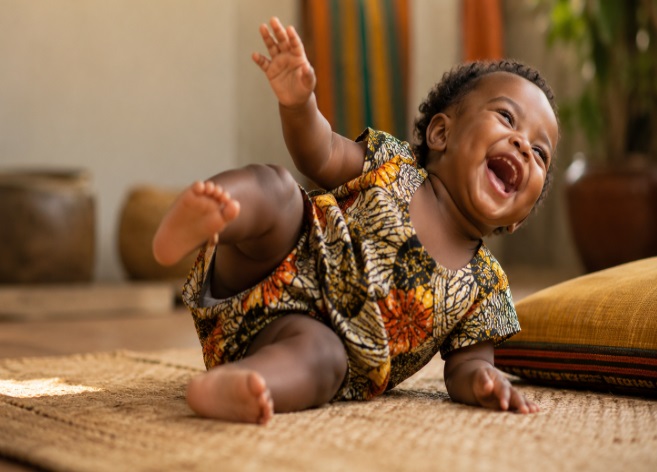
 

1. Falling is Normal and Necessary

Photo of an African toddler boy in playful fall

A toddler laughing after a minor fall, illustrating that small tumbles are a normal part of learning to walk and gaining confidence. AI-generated using OpenAI ChatGPT. Click on image to enlarge
 

  • Falling isn't a glitch in your toddler's walking; it's part of the actual learning. Every fall serves as a feedback signal to the brain that fine-tunes balance for the next attempt at walking.
  • It’s a mechanism that a toddler’s body uses to run its own training programme. Think of it less as "something going wrong" and more as “learning”.


2. Toddler Fall Facts to Know

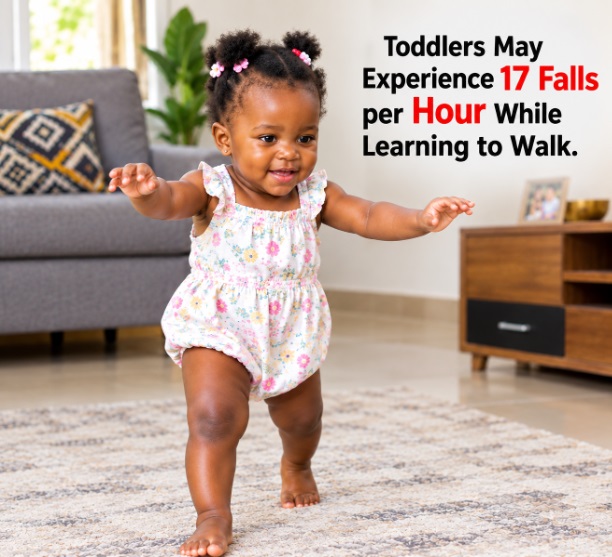
Infographic showing photo of an African toddler baby taking forst steps with data on falls rate per hour in children

An African toddler girl attempting to take her first step walking. AI generated image using ChatGPT. Click on image to enlarge. Click on image to enlarge.
 

  • Research found that 12–19-month-old toddlers take approximately 2,368 steps and experience around 17 falls per hour while learning to walk. These frequent and harmless falls help them to gain experience, take more steps and move further, leading to fewer falls, making falling a normal part of healthy development [1]. 
  • Most falls are low-impact and cause no major injury, and toddlers quickly try to stand and resume walking [2]. 


3. Higher Centre of Gravity Causes Instability & Imbalance

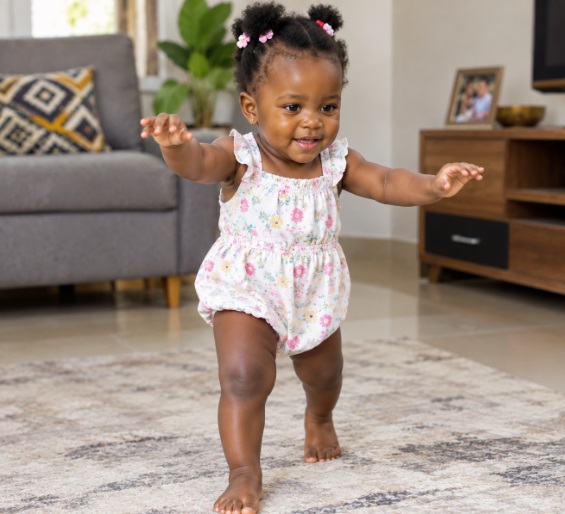
Photo of an African toddlr girl walking. Higher centre of gravity in toddlers causes temporary instability and imbalance when learning to walk.

Due to larger head and upper body, higher centre of gravity in toddlers causes temporary instability and imbalance when learning to walk. AI generated image using ChatGPT. Click on image to enlarge.
 

  • Young toddlers have a higher centre of gravity due to their proportionally larger head and upper body. Combined with developing balance and muscle control, this makes them naturally less stable during walking, which explains why frequent stumbling and falls are common in early walkers.
  • Early walkers use a wide stance, short steps, and raised arms to improve stability. As their muscles, balance, and coordination develop, these movements gradually become more efficient and adult-like.


4. Rapid Growth Spurts Makes for Clumsiness and Falls

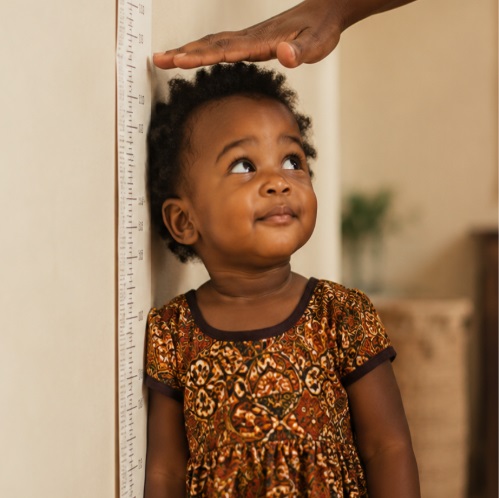
A toddler getting a height check, illustrating how rapid growth can temporarily affect balance and coordination.

A toddler getting a height check, illustrating how rapid growth can temporarily affect balance and coordination. AI-generated using OpenAI ChatGPT, Click on image to enlarge.


  • Rapid physical growth changes a toddler's body proportions, requiring the brain to adapt balance and movement continuously. During this adjustment period, toddlers may appear temporarily clumsy [4]. 
  • As the nervous system gains experience with the child's changing body, balance and coordination naturally improve.
  • A finding of the WHO says- Children typically grow about 10–12 cm during their second year of life, requiring constant adaptation in balance and movement, no wonder their bodies feel unfamiliar to them [5].


5. Curiosity Driven Movements Can Lead to Frequent Falls
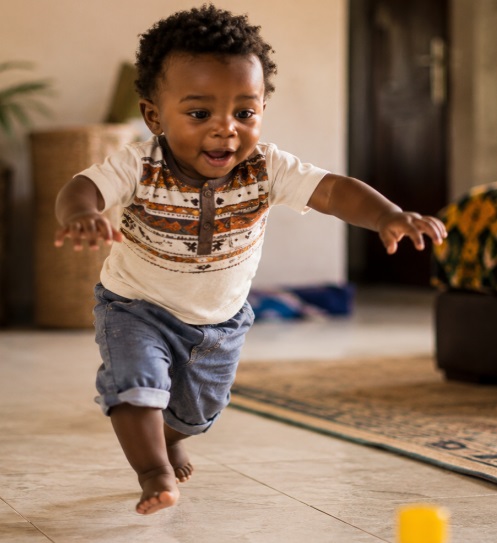
An African toddler boy eagerly moves toward a toy, showing how curiosity encourages exploration, and movement.

A toddler eagerly moves toward a toy, showing how curiosity encourages exploration, and movement. AI-generated using OpenAI ChatGPT. Click on image to enlarge.


  • Toddlers are naturally driven to explore their surroundings, often moving before their balance and coordination are fully developed. This curiosity is a normal part of healthy brain development, not a coordination problem and can lead to frequent stumbles and falls.
  • They try to run even before their walking is fully steady, which is extremely common from 15 months onward and can lead to falls.


6. Issues with Footwear & Walking Surfaces May Cause of Toddler Falls
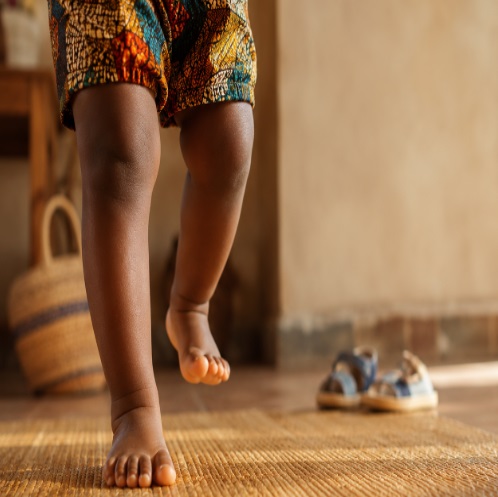
A toddler practising independent walking on a safe indoor surface, highlighting the importance of appropriate walking environments.

A toddler practising independent walking on a safe indoor surface, highlighting the importance of appropriate walking environments. AI-generated using OpenAI ChatGPT, Click on image to enlarge.


  • Shoes that are too loose, too tight, or have stiff soles can make balancing more difficult for new walkers.
  • Properly fitted footwear allows more natural foot movement, while poorly fitting shoes may alter the way young children walk.
  • Uneven ground, smooth tile floors, wet surfaces, loose rugs, and worn-out footwear can increase the chances of slipping or tripping in toddlers.

Parental tip: When safe, allow your toddler to walk barefoot indoors or choose lightweight, flexible shoes with non-slip soles that fit properly.
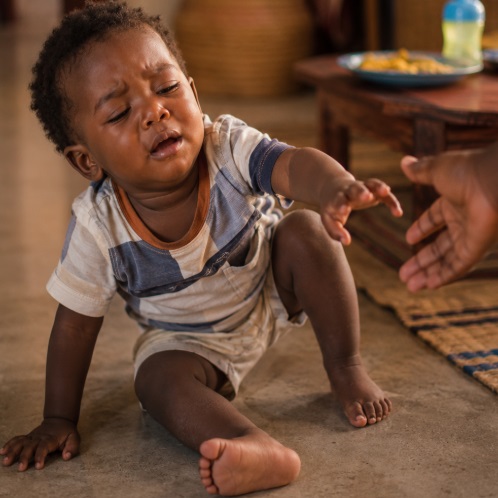
 

7. Fatigue May Cause Toddler Falls

An African toddler showing signs of tiredness after active play, illustrating how fatigue can temporarily affect balance and coordination.

An African toddler showing signs of tiredness after active play, illustrating how fatigue can temporarily affect balance and coordination. AI-generated using OpenAI ChatGPT. Click on image to enlarge.


  • When toddlers are tired, they may have more difficulty maintaining attention, balance, and self-control, which can increase the likelihood of stumbling during everyday activities.
  • A study found that missing a daytime nap reduced toddlers' ability to regulate their behaviour and respond effectively to challenging tasks, showing that adequate sleep plays an important role in children's daily functioning [6].

Parent Tip: Watching for patterns—such as falls occurring before naps or after long periods of active play—can help parents identify when fatigue may be contributing. Plan active play after your toddler has rested.
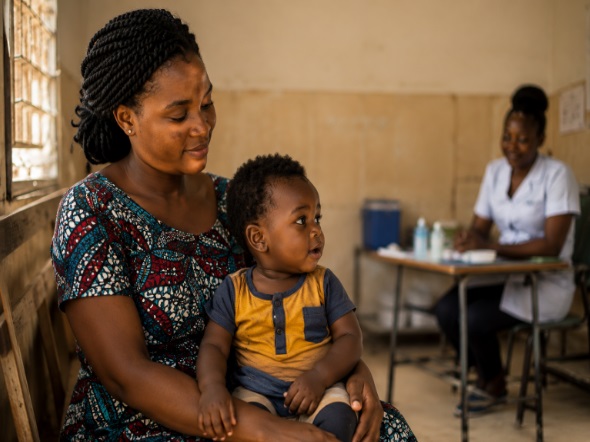
 

8. Signs You Need to Seek Help

Toddler with mother attending a routine health check for development concern.

An African toddler with mother attending a routine health check for development concern. AI-generated using OpenAI ChatGPT. Click on image to enlarge.


Most of the time, it is normal for a toddler to fall while trying to walk, but some signs deserve medical advice-

  • Your toddler always seems to fall to one side or isn't getting steadier over time.
  • They still walk on their toes most of the time, or their walk looks noticeably different.
  • Their balance or walking skills don't improve as expected with age.


9. Helping Your Toddler Build Confidence


An African mother supporting and helping her toddler build confidence by walking freely in a clutter-free living room. AI-generated using OpenAI ChatGPT, Click on image to enlarge

.

Create a safe, clutter-free space where your toddler can move, explore, and practice walking freely.
  • When it's safe, let your toddler walk barefoot indoors or choose lightweight, flexible shoes that fit well to support natural foot movement.
  • Encourage active play every day, but let your child learn at their own pace—every toddler develops differently.
  • Research shows that toddlers improve their balance and walking skills through regular opportunities to move and explore independently [4].


10. Clarifying Myths

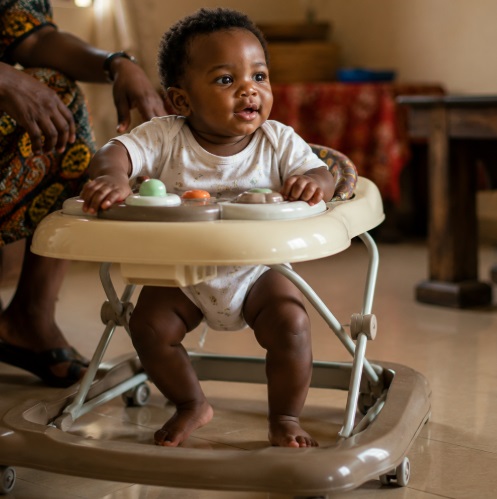
An African toddler using a baby walker: A common practice in many homes.

An African toddler boy using a baby walker: A common practice in many homes. AI-generated using OpenAI ChatGPT, Click on image to enlarge,
 

  • Research suggests that baby walkers do not help children learn to walk sooner and may delay some early walking and movement milestones. They have also been linked to a higher risk of preventable injuries. Health experts recommend supervised floor play instead, allowing toddlers to develop balance and coordination naturally [8].
  • Don’t try to rush your toddler, just support, encourage and let them learn at their own pace.


Wrap Up 

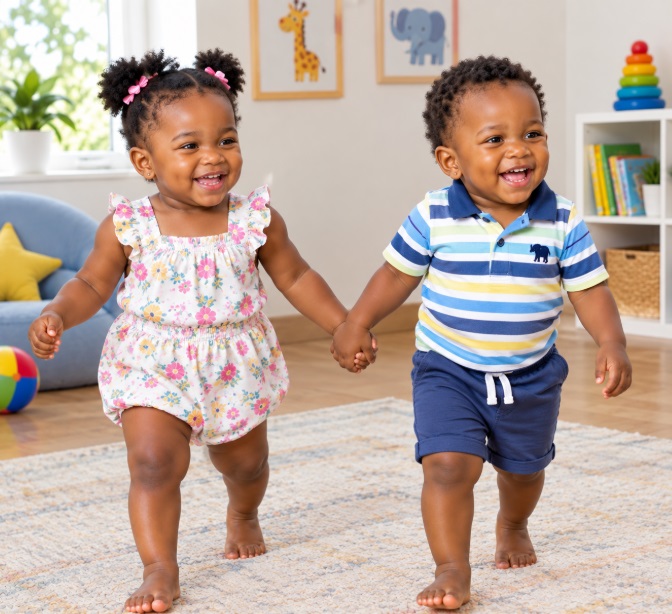
Two happy looking African toddlers, boy and girl, holding hands as they walk freely in a play room.

Two happy looking African toddlers, boy and girl, holding hands as they walk freely in a play room. Image created using ChatGPT. Click on image to enlarge.
 

  • Most toddlers fall because they're learning—not because something is wrong. Every step, stumble, and recovery helps build stronger balance, coordination, and confidence.
  • A toddler who falls today is often a toddler who walks more confidently tomorrow. Give them a safe space to practise, celebrate their progress, and remember that every child develops at their own pace.
  • Let them learn -With patience, practice, and a safe environment, confidence grows one step at a time.


References:

1. Adolph KE, Cole WG, Komati M, Garciaguirre JS, Badaly D, Lingeman JM, et al. How do you learn to walk? Thousands of steps and dozens of falls per day. Psychol Sci. 2012;23(11):1387–94. Available from here.

2. Han D, Adolph KE. The impact of errors in infant development: Falling like a baby. Dev Sci. 2021;24(5):e13069. Available from here.

3. Lempereur M, Leboeuf F, Rémy-Néris O, Brochard S. Biomechanical characteristics of the typically developing toddler gait: A narrative review. Children (Basel). 2022;9(3):406. Available from here.

4. Adolph KE, Hoch JE. Motor development: Embodied, embedded, enculturated, and enabling. Annu Rev Psychol. 2019;70:141–64. Available from here.

5. World Health Organization. WHO child growth standards [Internet]. Geneva: World Health Organization; 2006 [cited 2026 Jul 2]. Available from here.


Published: September 17, 2026.

© 2026. Datelinehealth Africa Inc. All rights reserved.

Permission is given to copy, use, and share content freely for non-commercial purposes without alteration or modification and subject to source attribution


Disclaimer

DATELINEHEALTH AFRICA INC., is a digital publisher for informational and educational purposes and does not offer personal medical care and advice. If you have a medical problem needing routine or emergency attention, call your doctor or local emergency services immediately, or visit the nearest emergency room or the nearest hospital. You should consult your professional healthcare provider before starting any nutrition, diet, exercise, fitness, medical or wellness program mentioned or referenced in the DatelinehealthAfrica website. Click here for more disclaimer notice.

Untitled Document