8 Gentle, Nourishing Snacks to Tame Pregnancy Food Aversions
By: Temitayo Adeola, RN, RM, RPHN, Freelance health writer and DLHA Volunteer. Medically reviewed by: KT Craig, MBBS, MScPH.
November 28, 2026

Pregnant woman covering her nose at the smell of a meal, showing food aversion during pregnancy. Image credit: Nano Banana.
: .
Have you ever looked at a food you once enjoyed and suddenly felt like you could not stand its smell, taste or even appearance?
For many pregnant women, this is not unusual. This is known as food aversion: a strong dislike of particular foods that may cause nausea, gagging, or discomfort when you see, smell, or eat them. They are common during pregnancy and may occur alongside nausea and vomiting, called “morning sickness” [1].
Common pregnancy food aversions are toward foods with strong smells and include: meat, eggs, milk, onions, garlic, tea and coffee, spicy foods, and fried foods.
Although the exact cause is not fully understood, hormonal changes are thought to play an important role. Pregnancy hormones, including human chorionic gonadotropin (hCG), the same hormone that is measured in pregnancy tests, can affect appetite, taste and sensitivity to smells.
Since aversions may include foods that are necessary for a wholesome pregnancy, it is important to find smaller, manageable meals and snacks that appeal to you that can help you maintain your nutritional intake [1].
This slideshow highlights eight gentle, nourishing snack options that pregnant women in Nigeria can try when food aversions make eating difficult.
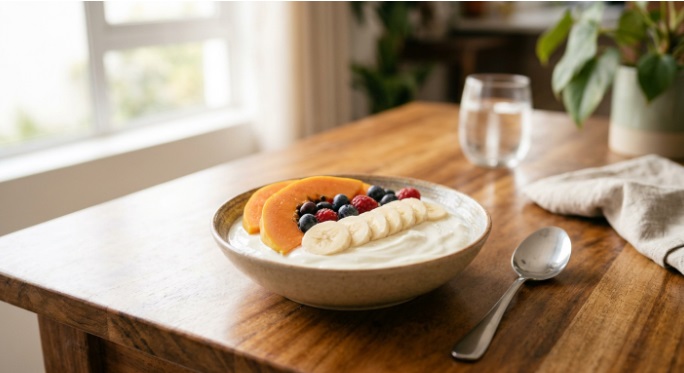
A bowl of yoghurt topped with sliced banana, papaya and mixed berries, served with a glass of water. Image credit: Nano Banana. Click on image to enlarge.
Plain yoghurt with fresh fruit provides calcium, protein and other nutrients that support maternal health. Fruits such as bananas, pawpaw and berries can add fibre and vitamins. Choose pasteurised yoghurt and wash fruits thoroughly before eating [2].
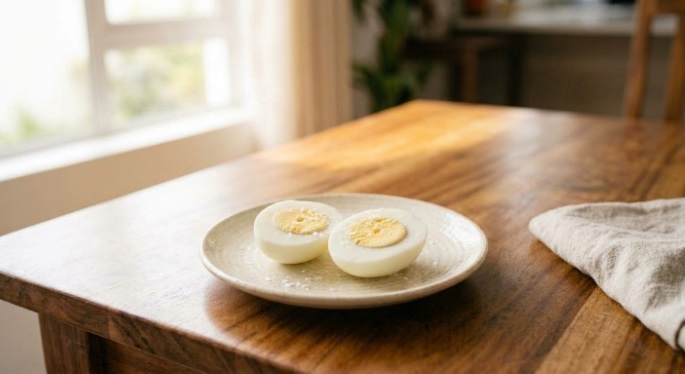
Two halves of a hard-boiled egg arranged on a ceramic plate. Image credit: Nano Banana. Click on image to enlarge.
Eggs are a convenient source of protein and provide choline, a nutrient that supports your baby's brain and nervous system development.
Eggs are among trigger foods especially when hot and freshly cooked. That's why cold or room-temperature eggs (such as hard-boiled eggs) which have less odor are preferred. Baking eggs into pancakes or blending them into dishes like fried rice, can also mask their taste and smell.
Ensure the egg is thoroughly cooked, with both the white and yolk firm [2].
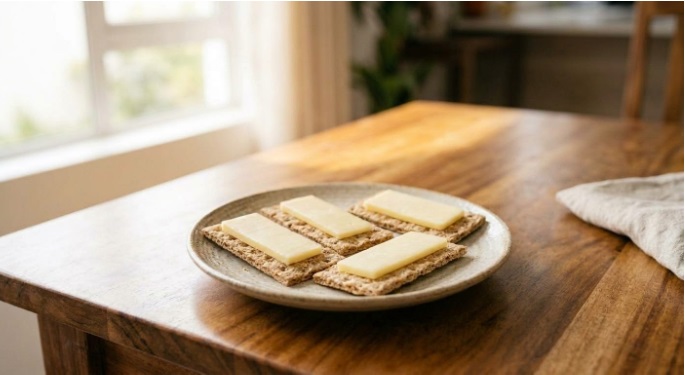
Wholegrain crackers topped with slices of cheese, arranged on a ceramic plate. Image credit: Nano Banana. Click on image to enlarge.
Dry, plain crackers are often well tolerated because they are high in carbohydrates and low in fat. Pairing a few crackers with a small piece of cheese adds protein.
Choosing the right cheese is important. Hard cheeses made with pasteurised milk and eaten cold or at room temperature usually have a less noticeable smell and may be easier to tolerate.
Keep crackers by your bedside if waking up nauseated. Eating a dry cracker before getting out of bed may help some people manage early-morning symptoms [3].
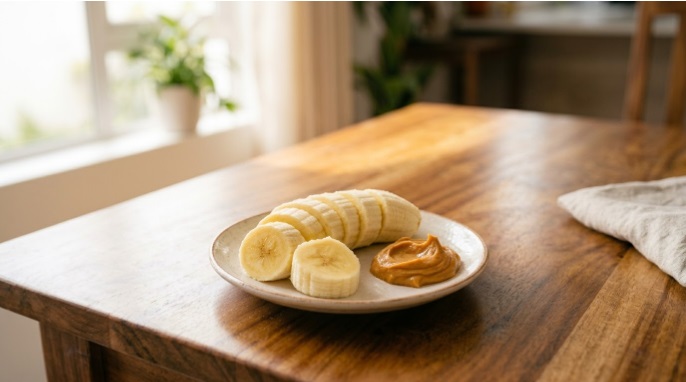
Sliced ripe banana rounds served on a small ceramic plate alongside a teaspoon of smooth groundnut paste. Image credit: Nano Banana. Click on image to enlarge.
Bananas are gentle, easy to digest, and provide carbohydrates and potassium. Groundnut paste adds protein and healthy fats, but use a small amount if rich foods make nausea worse.
Try half a banana with one teaspoon of groundnut paste. If the smell or texture of groundnut paste is unpleasant, eat the banana plain or with a few plain biscuits [2, 3].

A bowl of warm, smooth pap prepared with pasteurised milk on a wooden table. Image credit: Nano Banana. Click on image to enlarge.
A small bowl of oatmeal or pap prepared with pasteurised milk can provide a comforting snack. Oats provide carbohydrates and fibre, while milk contributes protein and calcium. If milk triggers nausea, prepare the pap or oats with water instead and add a little groundnut paste for protein and a dash of lemon for flavour. Adjust the consistency to suit your preference and avoid adding too much sugar [3].
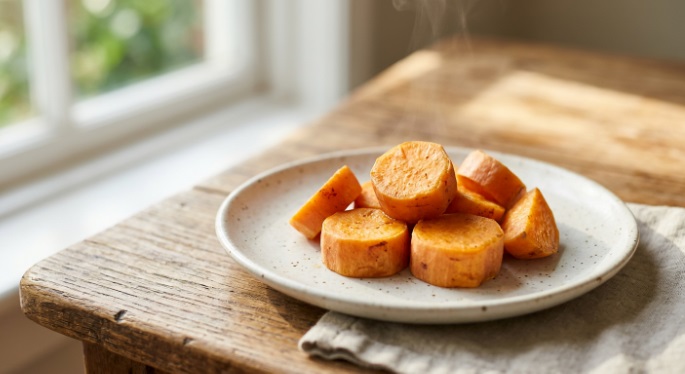
Plain boiled sweet potato slices on a ceramic plate. Image credit: Nano Banana. Click on image to enlarge.
Sweet potatoes and yam provide carbohydrates, fibre and beta-carotene, which the body converts to vitamin A. They are easy to prepare and can be eaten plain or with a mild accompaniment [3].
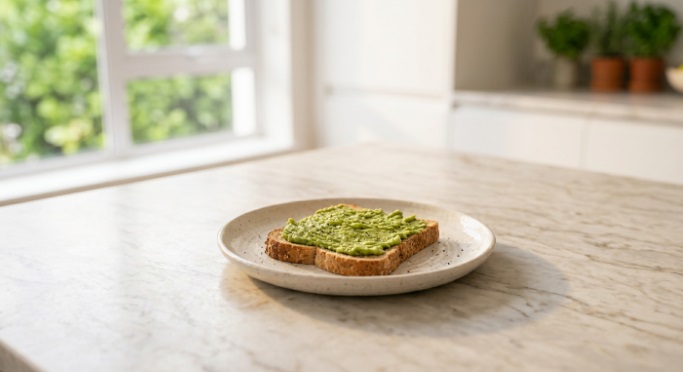
A single slice of lightly toasted bread spread with a thin layer of mashed avocado on a ceramic plate. Image credit: Nano Banana. Click on image to enlarge.
Plain toast is a good option when you feel nauseous because it is dry, mild and easy to eat. Avocado adds healthy fats, fibre, folate and potassium, making the snack more nutritious [3].
Try one slice of toast with a thin spread of mashed avocado. You can add a well-cooked egg or pasteurised cheese for extra protein if you can tolerate it.
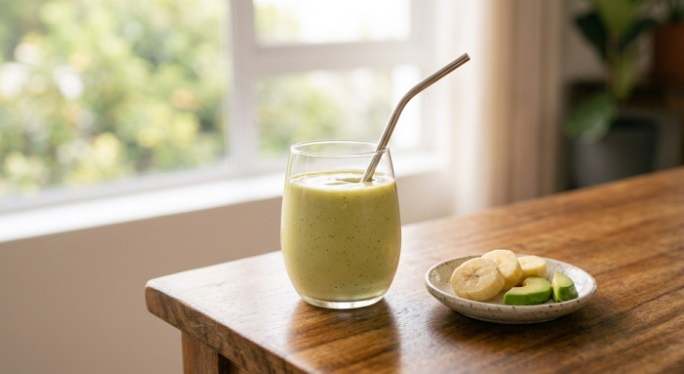
A chilled glass of banana and avocado smoothie served with fresh fruit slices. Image credit: Nano Banana. Click on image to enlarge.
A homemade smoothie can be useful when solid foods are difficult to tolerate. Blend banana, avocado and pasteurised milk for a nourishing drink containing carbohydrates, healthy fats and protein. Serve chilled if cold drinks are easier to tolerate [3].
It is also possible to get around aversion by "hiding" the food you don't want in other foods, for example if averse to salads and they make you feel sick, putting the leafy greens in a fruit smoothie will mask the taste or texture.
Remember that these snacks are options, not guaranteed remedies for nausea. Every pregnant woman's experience is different, so choose what you can comfortably tolerate.

Nausea and food aversions are common during pregnancy, but severe or ongoing symptoms shouldn’t be ignored.
Seek medical attention if you:
These symptoms may indicate dehydration or a severe form of morning sickness called hyperemesis gravidarum, which may require medical treatment. Do not wait for symptoms to become severe before seeking help.

A pregnant woman sitting comfortably on a couch, smiling as she eats a small bowl of fresh fruit. Image credit: Gemini. Click on image to enlarge.
Food aversions commonly begin during the first trimester, although the timing varies from one pregnant woman to another. For many, they improve as pregnancy progresses, particularly during the second trimester, but some may continue until delivery.
A food that looks appealing today may become difficult to tolerate tomorrow, and that is not something you should blame yourself for. You can try foods you previously disliked again later to see if your tolerance has changed.
Start with small portions, experiment with different food combinations and pay attention to what your body tolerates. Remember that these snack ideas are options, not rules. What works for one pregnant woman may not work for another.
Food aversions do not usually affect a baby's growth if you are still getting enough nutrients and fluids. However, persistent difficulty eating, dehydration or severe vomiting may affect your health and the baby's birth weight. Seek professional guidance to protect your health and support your baby's development.
1. Yalew A, Silasie WT, Anato A, Fikrie A. Food aversion during pregnancy and its association with nutritional status of pregnant women in Boricha Woreda, Sidama Regional State, Southern Ethiopia, 2019. A community-based mixed cross-sectional study design. Reproductive Health [Internet]. 2021 Oct 18;18(1):208. Available from here.
2. Johns Hopkins Medicine. 5 Snack Foods to Eat While Pregnant, [Internet, n.d.]. [Cited 2026 Nov 21]. Available from here.
3. Knisley K. Pregnancy Snacks for Your Cravings and Challenges. [Internet]. June 29, 2020. Healthline. [Cited 2026 Nov 21]. Available from here.
Related:
Published: November 28, 2026
© 2024. Datelinehealth Africa Inc. All rights reserved.
Permission is given to copy, use and share content for non-commercial purposes without alteration or modification and subject to source attribution.
DATELINEHEALTH AFRICA INC., is a digital publisher for informational and educational purposes and does not offer personal medical care and advice. If you have a medical problem needing routine or emergency attention, call your doctor or local emergency services immediately, or visit the nearest emergency room or the nearest hospital. You should consult your professional healthcare provider before starting any nutrition, diet, exercise, fitness, medical or wellness program mentioned or referenced in the DatelinehealthAfrica website. Click here for more disclaimer notice.