Overlooked and Unchecked: The Rapid Rise of Diabetes in Young Adult Africans
By Kelechi Nwaowu – BNSc, RN, Freelance Medical and Health Writer. Medically reviewed by: Chinonso Cynthia Ukah, BNSc, RN, RM, RPHN.
August 10, 2026

Close up photographic images of young adult Nigerians, smiling and posing together in happy moments. AI generated image from ChatGPT. Click on image to enlarge
Ask many young Nigerians for example what they know about diabetes, and you'll often hear that it is a sugar disease that mainly affects older adults. In many African communities, diabetes is still seen as a condition your grandfather might have, not your university roommate, your 24-year-old cousin, or you.
That belief is no longer accurate. The gap between who people think diabetes affects and who it actually affects is growing wider every year.
Across sub-Saharan Africa, diabetes is increasingly being diagnosed in younger people, including children, teenagers, and young adults (1, 2, 3). This growing trend is driven by several factors ((4 – 9), including:
The rapid rise of diabetes among young Africans is an overlooked and so far unchecked public health challenge. The good news is that many cases of type 2 diabetes can be prevented or delayed through healthy lifestyle choices and early diagnosis. This article explores the challenge of the rising trend of type 2 diabetes In African youths. It explains:
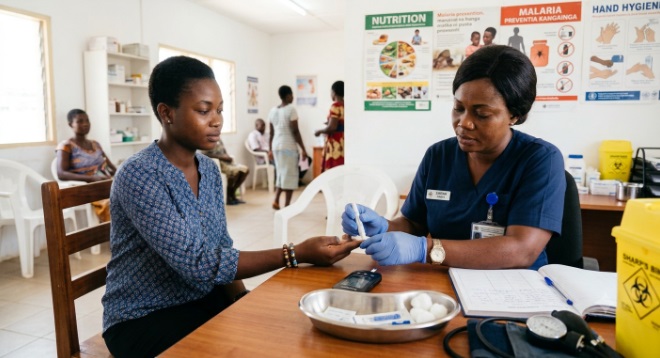
A young African woman having her blood sugar checked by a healthcare worker during a routine diabetes screening at a primary healthcare clinic. AI image generated from: Gemini. Click on image to enlarge.
Diabetes is a long-term condition in which the body cannot properly regulate the level of glucose (sugar) in the blood (10). To understand why this happens, it helps to understand first what glucose is and how the body normally uses it.
Glucose is the body's main source of energy. It comes from the food we eat and is used by almost every organ to power essential functions, such as breathing, thinking, walking, and keeping the heart beating. After food is digested, glucose enters the bloodstream and is transported to the body's cells, where it is used to produce energy.
For glucose to move from the bloodstream into the cells, the body needs a hormone called insulin (10). Insulin is produced by the pancreas, a gland located behind the stomach. It acts like a key, allowing glucose to enter the cells so it can be used for energy.
In people with diabetes, the body either does not produce enough insulin or cannot use it effectively (10). As a result, glucose remains in the bloodstream rather than entering cells, causing blood sugar levels to rise.
Over time, prolonged high blood sugar can damage blood vessels and nerves throughout the body. Without proper treatment, this can lead to serious complications affecting the eyes, kidneys, heart, nerves, and feet (10).
There are two major types of diabetes recognised worldwide. Researchers have also identified a possible third subtype in Africa that is still being studied.
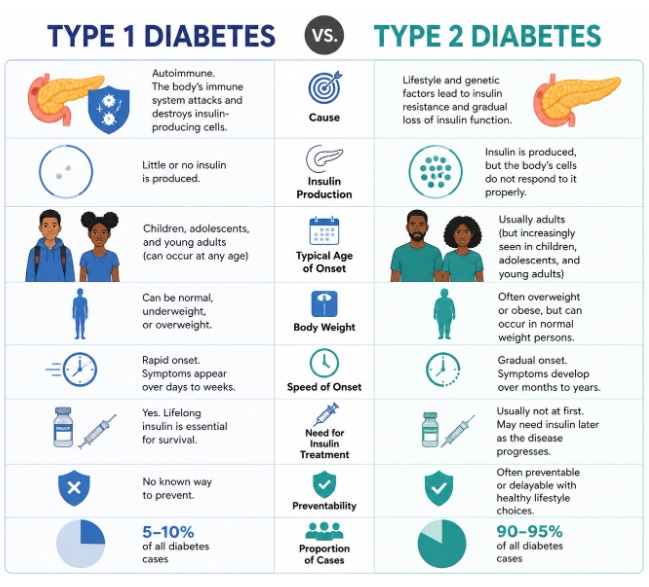
A comparison infographic showing the major differences between type 1 diabetes and type 2 diabetes. Ai generated image from ChatGPT. Click on image to enlarge.
Type 1 diabetes is an autoimmune condition. In this type of diabetes, the body's immune system mistakenly attacks and destroys the beta cells that produce insulin in the pancreas. As a result, the pancreas produces little or no insulin (6).
Because the body produces little or no insulin, people with type 1 diabetes need lifelong insulin injections to survive (10).
Type 1 diabetes most commonly develops in children, adolescents, and young adults, although it can occur at any age (6). Unlike type 2 diabetes, it is not caused by diet, lifestyle, or being overweight.
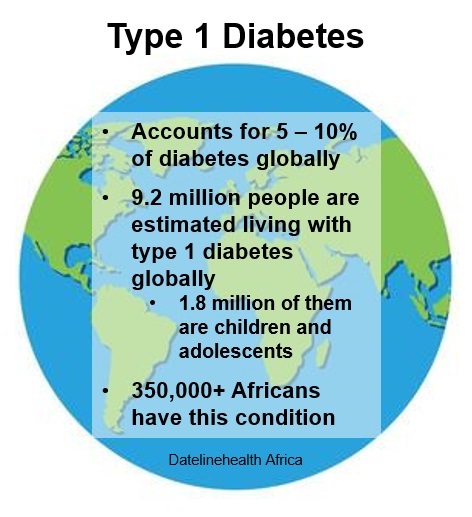
Illustration showing T1D global burden on a world map globe. Click on image to enlarge.
Type 1 diabetes accounts for 5-10% of all diabetes worldwide (10). Globally, an estimated 9.2 million people are living with type 1 diabetes; 1.8 million of them are children and adolescents. In Africa alone, over 350,000 people have this condition as of 2024 (11).
Type 2 diabetes develops differently from type 1 diabetes. In this form of diabetes, the pancreas still produces insulin, but the body's cells do not respond to it properly. This is known as insulin resistance. To compensate for this, the pancreas produces more insulin to keep blood sugar levels under control (6). However, over time, the pancreas can no longer produce enough insulin to meet the body's needs, leading to elevated blood glucose levels (6).
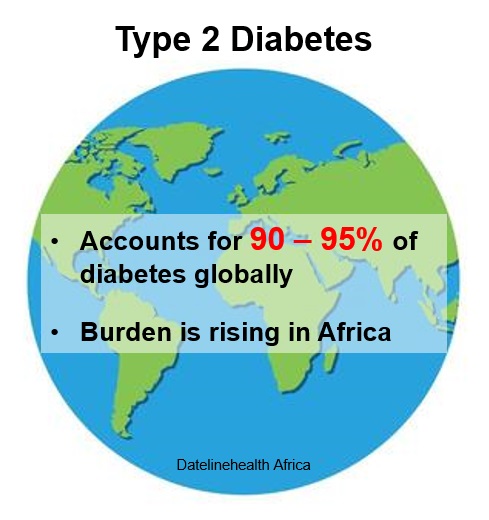
Illustration showing T2D global burden on a world map globe. Click on image to enlarge.
Type 2 diabetes accounts for about 90 to 95% of all diabetes cases worldwide (10). It usually develops gradually over several years, and because it often causes few or no symptoms in its early stages, many people do not realise they have it until complications develop or it is discovered during a regular health check-up.
Historically, type 2 diabetes was called “adult-onset diabetes” because it was seen mainly in adults (10). Today, that term is no longer accurate as type 2 diabetes is increasingly being diagnosed in children, adolescents, and young adults, particularly in sub-Saharan Africa (1, 2, 3).
A 2025 study published in The Lancet Diabetes & Endocrinology suggests that some young Africans may have a form of diabetes that does not fit the usual features of either type 1 or type 2 diabetes (2).
Researchers studying young people in Cameroon, Uganda, and South Africa found that many participants diagnosed with type 1 diabetes did not show the usual signs of the condition, including the immune proteins (called antibodies) that normally indicate the body's immune system is attacking the pancreas. These findings suggest that some young Africans may have a different subtype of diabetes that has not yet been officially classified (2).
The discovery could help improve diagnosis and treatment of diabetes in African populations. However, more research is needed before this possible subtype becomes an officially recognised form of diabetes.
Are you interested in the full findings of the above study? Read here.
Evidence from across sub-Saharan Africa shows that type 2 diabetes is becoming an increasingly public health problem, with many cases remaining undiagnosed until complications develop.
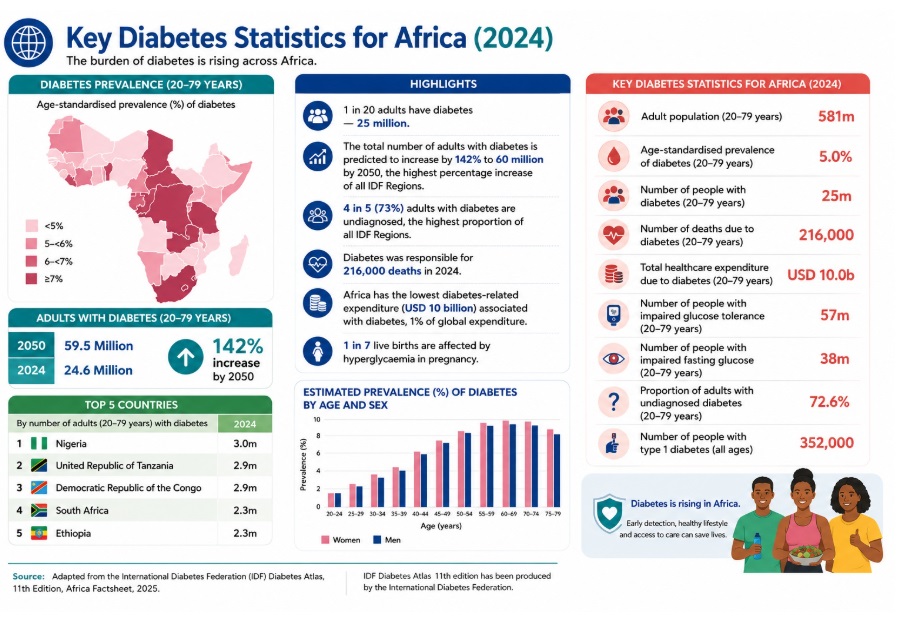
Infographic summarizing the key diabetes statistics for Africa in 2024. Adapted from the International Diabetes Federation (IDF) Diabetes Atlas, 11th Edition, Africa Factsheet (2025). The original factsheet was simplified and redesigned with assistance from ChatGPT to improve readability and presentation for a general audience. Click on image to enlarge.
According to the 2024 Diabetes Atlas (11th edition) from the International Diabetes Federation (IDF), diabetes affects about 5% of people in the IDF Africa Region (12). Although this is the lowest diabetes occurrence of any IDF region worldwide, it comes with a major concern, as about 73% of people living with diabetes in Africa have not been diagnosed – the highest proportion of any region globally (12).
In practical terms, this means that nearly three out of every four Africans with diabetes do not know they have the condition. As a result, many continue living with high blood sugar levels without treatment, increasing their risk of serious complications.
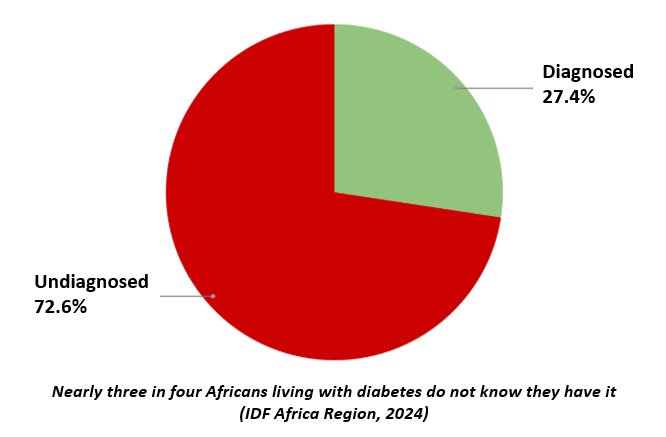
Pie chart showing diabetes diagnosis status in Africa in 2024. About 72.6% of people living with diabetes are undiagnosed, while 27.4% have been diagnosed. Data adapted from the International Diabetes Federation (IDF) Diabetes Atlas, 11th Edition (2025). Chart created by the author using Google Docs. Click on image to enlarge.
In fact, the IDF estimates that the number of people living with diabetes in Africa will increase by 142% (60 million people) between 2024 and 2050. This is one of the largest estimated increases in any region of the world (12).
Studies on the occurrence of diabetes across various African countries show similar results. For example, a 2024 analysis of different studies estimated that about 7% of adults in Nigeria have type 2 diabetes, equal to about 8.02 million people, or about one in every 14 adults (4).
Likewise, another study from Mwanza, Tanzania, reported a diabetes prevalence of 7.8% among young adults with a median age of just 21 years (3). These findings suggest that diabetes is no longer confined to adults but is increasingly affecting younger populations across Africa.
Type 2 diabetes usually develops over many months or years as several risk factors gradually impair the body's ability to regulate blood sugar. The good news is that many of these risk factors can be prevented or changed. Understanding them is the first step towards reducing your risk.
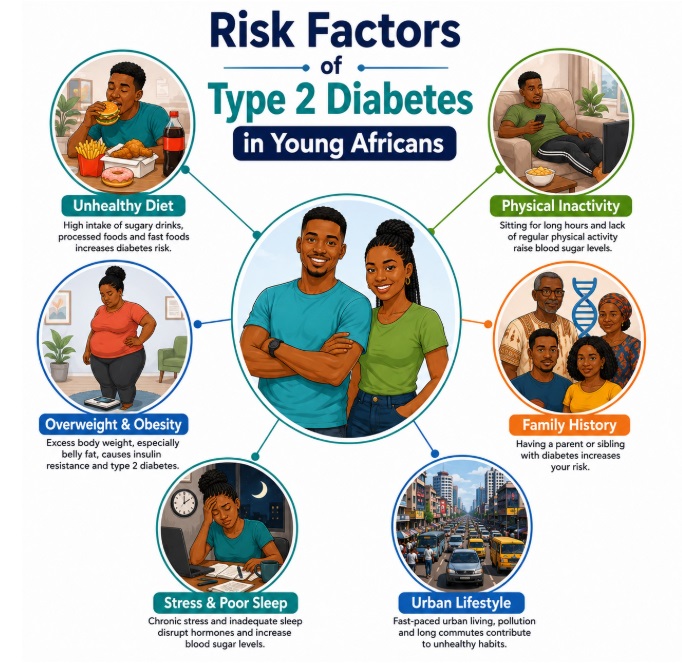
Info-poster illustrating the common risk factors for type 2 diabetes among young Africans. AI image generated from ChatGPT. Click on image to enlarge.
Excess body weight is one of the strongest risk factors for type 2 diabetes. As rates of overweight and obesity continue to rise across African countries such as Nigeria, so does the number of young people developing type 2 diabetes (4).
Being overweight, especially around the waist, makes it harder for the body's cells to respond to insulin. This increases insulin resistance and the risk of developing type 2 diabetes (4).
Also note that being slim does not guarantee protection from type 2 diabetes. Some people develop diabetes despite having a healthy body weight, a form sometimes referred to as lean type 2 diabetes. Research suggests this presentation is increasingly growing in different African countries (13). This means that young Africans of any body size can develop type 2 diabetes, especially if other risk factors are present.
Ultra-processed foods (factory-made foods) are foods that have been heavily changed during production. Some examples are instant noodles, white bread, fast food, packaged snacks, and sugar-sweetened drinks. They often contain artificial flavours, colours, and preservatives, as well as high amounts of refined carbohydrates, unhealthy fats, and added sugars.
Across Africa, traditional meals made with whole grains, legumes, vegetables, fruits, and lean protein are increasingly being replaced by these convenient, widely available, and often affordable foods. Over time, frequent consumption can cause repeated spikes in blood sugar, increasing the risk of insulin resistance (5).
Research across sub-Saharan Africa consistently shows that diets high in ultra-processed foods and sugar-sweetened beverages are linked to increasing rates of overweight, obesity, and type 2 diabetes, particularly in urban African communities (5, 6).
3. Physical Inactivity and Sedentary Lifestyles
A few decades ago, the daily lives of many Africans involved considerable physical activity, such as walking to markets, outdoor play, farming, carrying water, and other forms of manual work. Today, that has changed. Many young Africans now spend much of their day sitting in lecture halls, offices, cars, or buses, studying, working on computers, or scrolling through their mobile phones. As daily routines become less physically active, the risk of developing type 2 diabetes continues to rise (6).
Regular physical activity helps the body's cells respond better to insulin, making it easier for glucose to move from the bloodstream into the cells for energy (6).
Research has consistently shown that people who spend long periods sitting and do not get enough physical activity are more likely to develop type 2 diabetes than those who exercise regularly. Even simple activities such as brisk walking, cycling, dancing, or playing sports can improve insulin sensitivity and help reduce the risk of diabetes (10).
Having a close family member with type 2 diabetes increases your risk of developing the condition. If your parent, brother, sister, or grandparent has diabetes, you are more likely to develop it than someone with no family history (7). A 2020 study suggests that this risk is higher from mother to children (7).
Researchers believe that genetics partly explains why some people develop type 2 diabetes more easily than others. Studies also suggest that people of African ancestry may develop the condition at a lower body weight than people from some other populations, even when they have similar lifestyles (7).
Although you cannot change your genes, knowing your family history can help you take action early. Eating a healthy diet, staying physically active, maintaining a healthy weight, and having your blood sugar checked regularly can help detect diabetes early or reduce your risk of developing it.
5. Stress and Poor Sleep
Stress does not directly cause diabetes, but long-term stress can increase the risk of developing type 2 diabetes. Many young Africans face ongoing challenges such as unemployment, financial difficulties, academic pressure, demanding jobs, and relationship problems. These stresses can affect both physical and mental health.
When the body is under constant stress, it releases hormones that make it harder for insulin to work properly (8). Stress can also lead to unhealthy habits such as overeating (especially sugary or processed foods), being less physically active, and sleeping poorly. Together, these changes can increase the risk of type 2 diabetes.
Poor sleep is also linked to diabetes. Research suggests that people who regularly get too little sleep or have poor-quality sleep are more likely to develop insulin resistance and high blood sugar over time (9).
One of the most dangerous features of type 2 diabetes is that it often develops quietly. The symptoms usually appear gradually and can easily be mistaken for stress, fatigue, or the demands of everyday life. As a result, many people live with high blood sugar for months or even years before they are diagnosed. By then, the disease may have already started damaging the eyes, kidneys, nerves, heart, and blood vessels.
Recognising the early warning signs and seeking medical care promptly can lead to earlier diagnosis, timely treatment, and a lower risk of long-term complications.
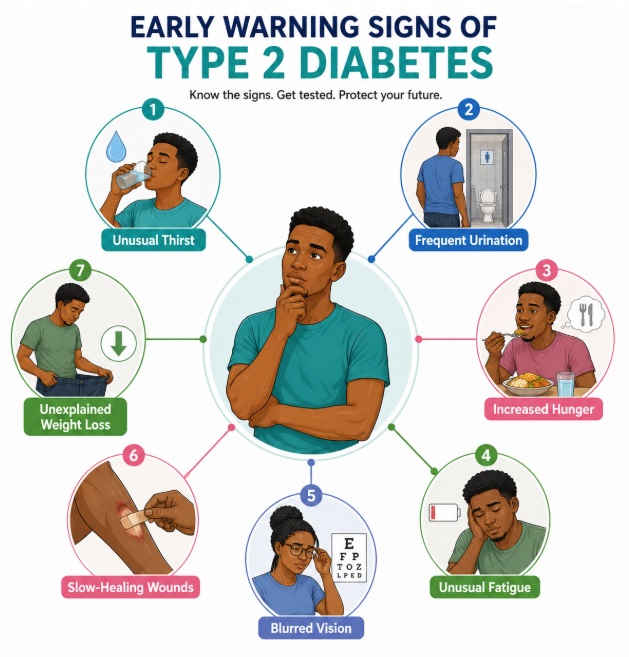
Info-poster showing the early warning signs and symptoms of type 2 diabetes. AI image generated from ChatGPT. Click on image to enlarge.
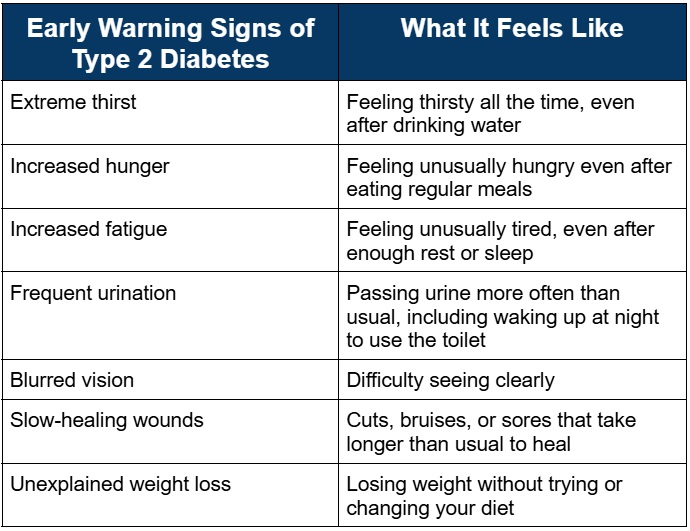
Table showing the early warning signs of type 2 diabetes and what they feel like.. Source WHO. Click on image to enlarge.
Common early signs include:
Note: Not everyone with type 2 diabetes develops all of these symptoms. Some people have only one or two, while others have no noticeable symptoms in the early stages. This is why regular blood sugar screening is especially important for people with risk factors.
Many of these symptoms can easily be dismissed. For example, feeling thirsty may seem normal on a hot day. Tiredness is often blamed on work, studies, or lack of sleep. Blurry vision may be attributed to spending too much time looking at screens, while slow-healing cuts or frequent infections may not seem serious enough to warrant a hospital visit.
Also, for many young Africans, the cost of healthcare, limited access to medical services, and the belief that diabetes only affects older people can further delay seeking medical attention.
The longer diabetes goes undetected, the greater the risk of damage to the eyes, kidneys, nerves, heart, and blood vessels. Recognising the warning signs early and getting tested can make a significant difference.
Many cases of type 2 diabetes can be prevented through healthy lifestyle habits, including healthy eating, regular physical activity, maintaining a healthy weight, knowing your blood sugar level, and managing stress.
For a detailed guide on preventing and managing type 2 diabetes, read: Management of Type 2 Diabetes in Nigeria
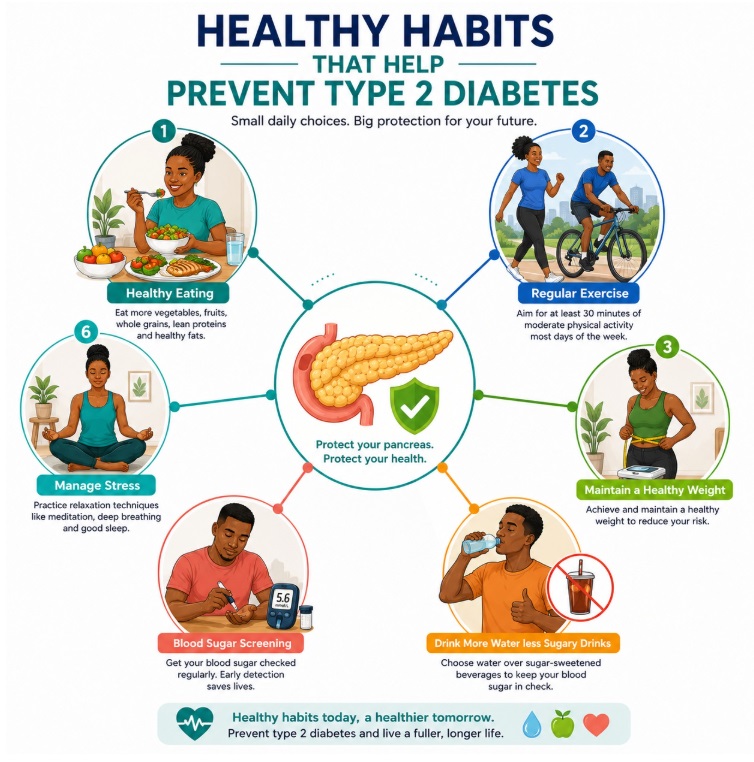
Info-poster showing healthy lifestyle habits that help prevent type 2 diabetes. AI image generated from chatGPT. Click on image to enlarge.
Diabetes is no longer a condition that affects only older adults. Across Africa, more young people are being diagnosed with the disease, driven by changes in diet, reduced physical activity, rising rates of overweight and obesity, chronic stress, and rapid urbanisation.
The good news is that type 2 diabetes is largely preventable. Healthy eating, regular physical activity, maintaining a healthy weight, getting enough sleep, and having your blood sugar checked, especially if you are at risk, can all help reduce your chances of developing the disease.
If you have any of the warning signs or risk factors discussed in this article, do not ignore them. Speak with a healthcare professional and get tested if necessary. Early diagnosis and treatment can prevent serious complications and help you live a healthier life.
Diabetes does not develop overnight, and neither does prevention. The healthy choices you make today, from eating better and staying active to getting your blood sugar checked, can help protect your health for years to come.
Related:
Type 1 Diabetes Mellitus: An Explainer for Africans
Type 2 Diabetes: What Africans Need to Know
Lean Type 2 Diabetes Explained To Africans
Type 2 Diabetes Mellitus in African Children
Childhood Diabetes in sub-Saharan Africa: Type 1
10 Myths and Falsehoods about Diabetes in sub-Saharan Africa
You May Have Prediabetes and Not Know. How to Find Out (Tips)
Management of Type 2 Diabetes in Nigeria
Published: August 10, 2026
© 2026. Datelinehealth Africa Inc. All rights reserved.
Permission is given to copy, use, and share content freely for non-commercial purposes without alteration or modification and subject to attribution as to source.
DATELINEHEALTH AFRICA INC., is a digital publisher for informational and educational purposes and does not offer personal medical care and advice. If you have a medical problem needing routine or emergency attention, call your doctor or local emergency services immediately, or visit the nearest emergency room or the nearest hospital. You should consult your professional healthcare provider before starting any nutrition, diet, exercise, fitness, medical or wellness program mentioned or referenced in the DatelinehealthAfrica website. Click here for more disclaimer notice.