
Image of African adults in everyday settings, including work, study, travel, and home environments, highlighting daily sitting habits and simple ways to add more movement. Credit: Chat GPT
By: Zikra Akram, Final Year Medical Student, Freelance Health Writer and DLHA Volunteer.
September 10, 2026
Many people spend hours sitting each day, at work, while studying, during long journeys, or relaxing at home, without even realizing. But the problem isn't sitting itself. It's spending too much time sitting with too little movement in between.
When you’re sitting all day, you are not moving as much. This sedentary behaviour has been linked to all sorts of health problems including back pain, heart disease, type 2 diabetes, anxiety and depression, cancer, circulation problems and even a shorter life.
But here’s the thing: you don't have to stop sitting altogether. Small changes that help you sit less and move more can be really helpful and can easily fit into your daily routine.
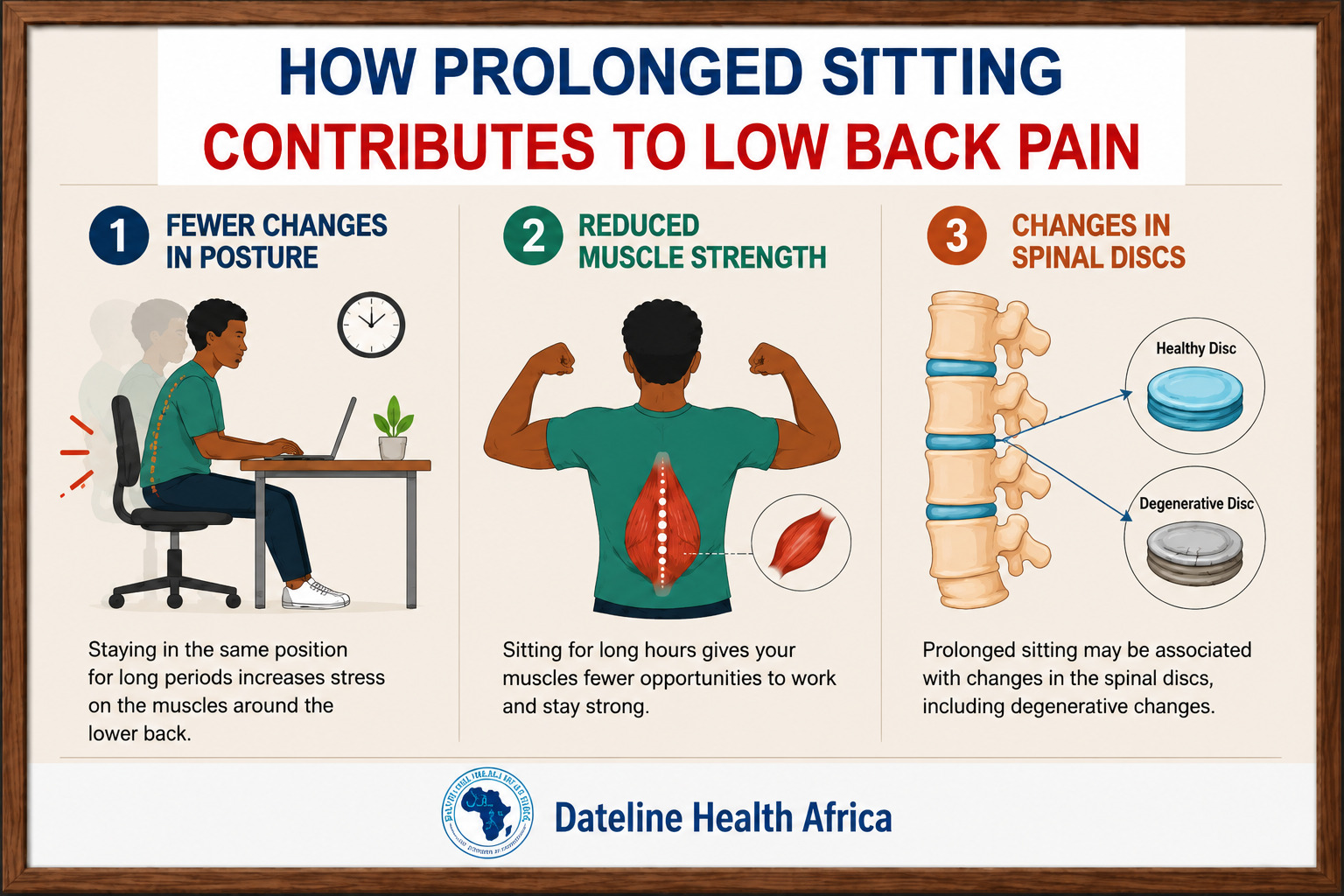
Infographic showing how prolonged sitting may contribute to low back pain through reduced posture changes, weaker muscles, and spinal disc changes. Image Credit: Nano Banana
Long periods of sitting may affect your back in several ways:
Related: Can Prolonged Sitting Cause Lower Back Pain: What Research Says
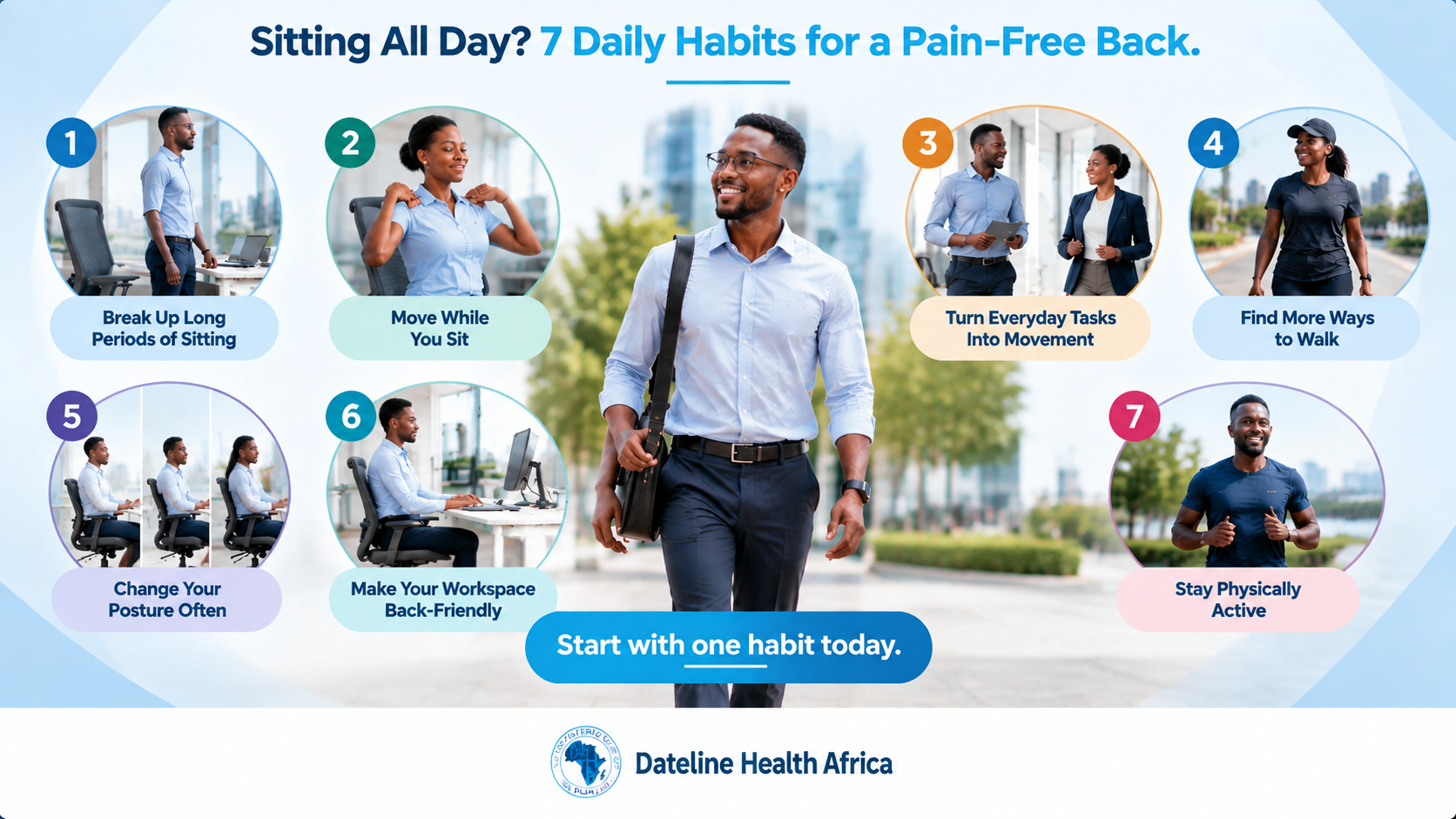
Infographic demonstrating seven daily habits, including movement breaks, walking, posture changes, and physical activity for a healthier pain-free back. Credit: Chat GPT
Read on
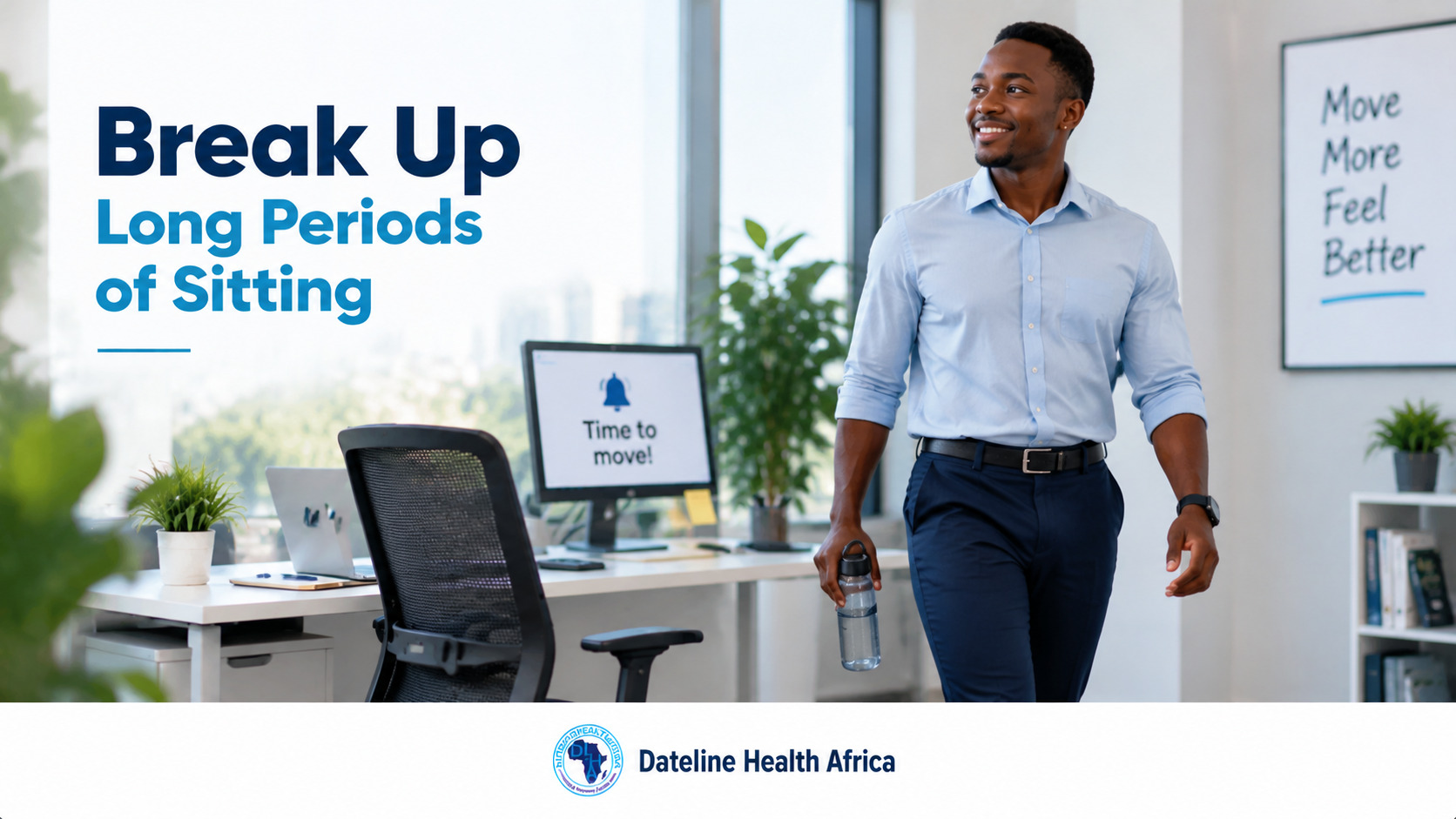
Image of an African office worker standing beside a desk and moving away from a workstation, highlighting the importance of breaking up long periods of sitting. Credit: Chat GPT
One of the simplest ways to reduce your sitting time is by taking regular movement breaks even if they are only a minute or two, says Jen Uschold, Physical Therapist, Fellow of Pain Science, Pain Team Faculty at Evidence in Motion.
“It is recommended to get up every hour, but for a lot of people that idea alone feels daunting and they end up doing nothing at all. So, even if you are willing to commit to three real breaks a day, that's a win, and that's exactly the starting point I want”, she says.
Researchers also continue to emphasize the importance of active movement breaks in reducing the risk of back pain (1).
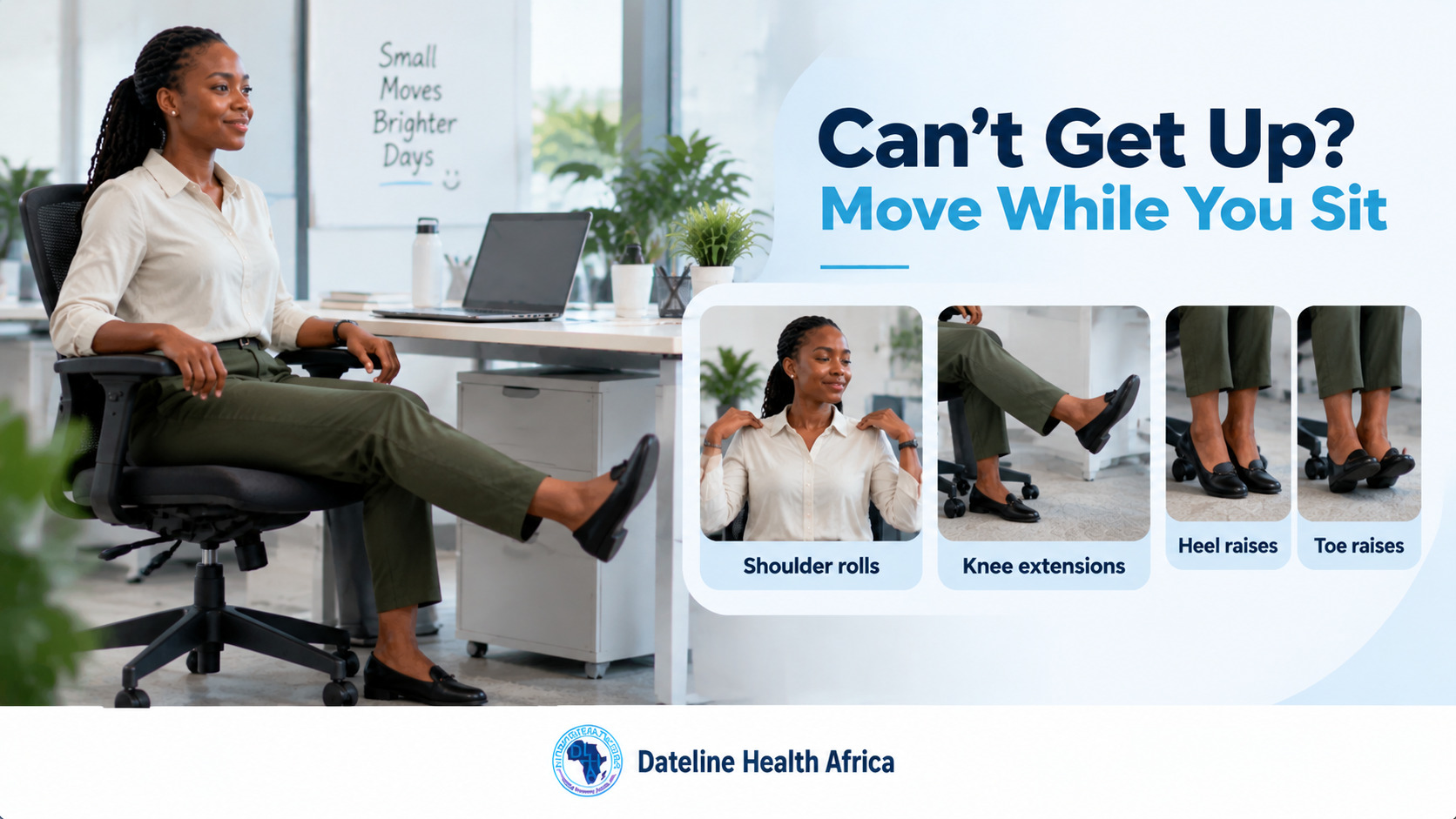
Image of an African female office worker performing movements while sitting at a desk, demonstrating simple exercises that can support movement when unable to get up. Credit: Chat GPT.
Getting up is a great way to break up sitting. But if you can’t leave your seat right away, you can still perform light movements while sitting. Here are some that Uschold recommends.
Make sure to choose movements that feel comfortable and stop if they cause pain.
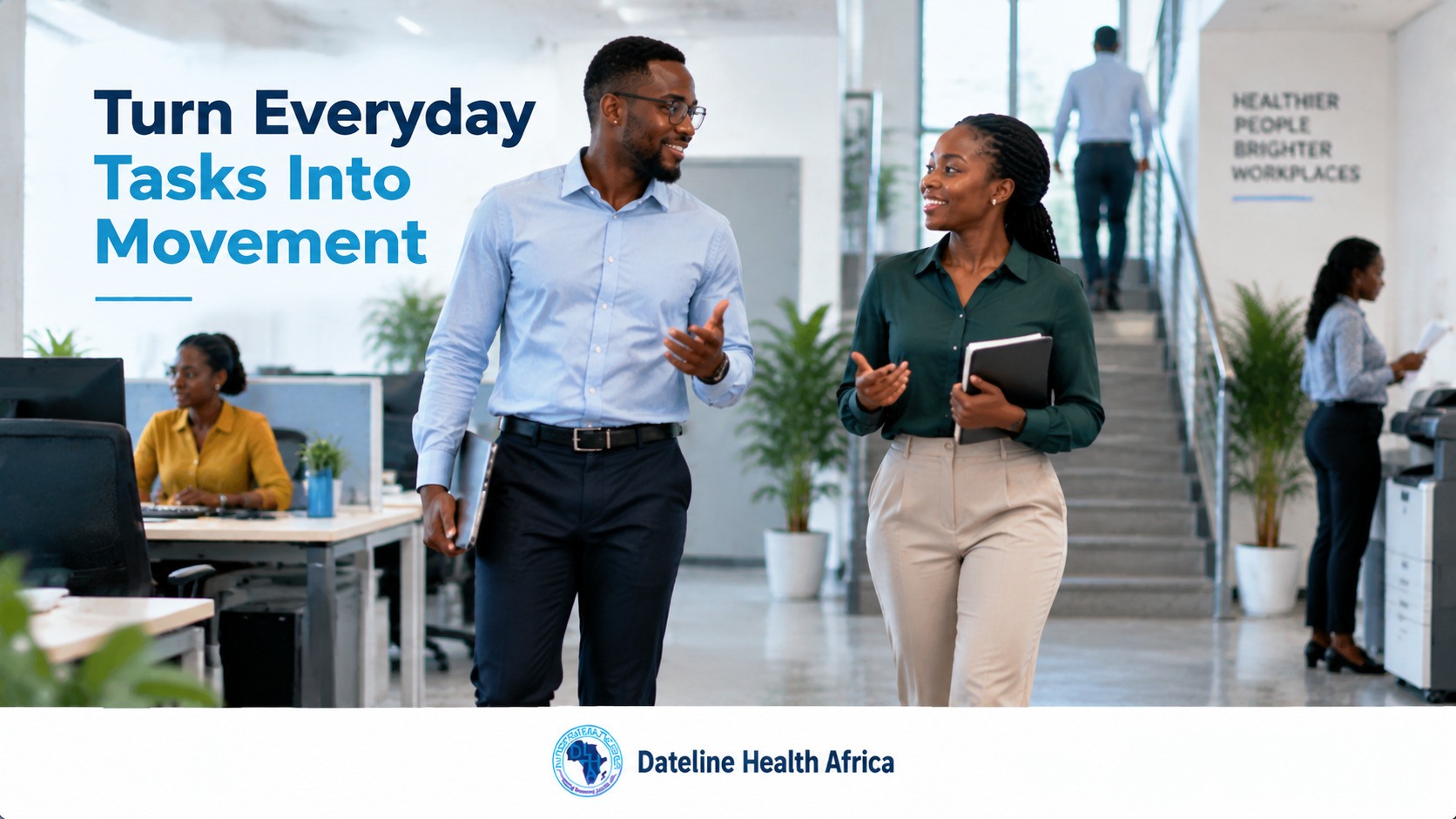
Image of African office workers having a discussion while walking, showing how everyday activities can create opportunities for more movement during the day. Credit: Chat GPT
You don't always need to schedule exercise to become more active. Look for opportunities to move while doing things that you already do. For instance, try to:
These small choices can add movement to your day without requiring extra workout time.

Image of an African man walking near a bus stop, highlighting how walking part of your commute can add more movement to daily routines. Credit: Chat GPT
Walking is another simple way to replace sitting with movement. Look for small opportunities to fit more walking into your day. Try to:
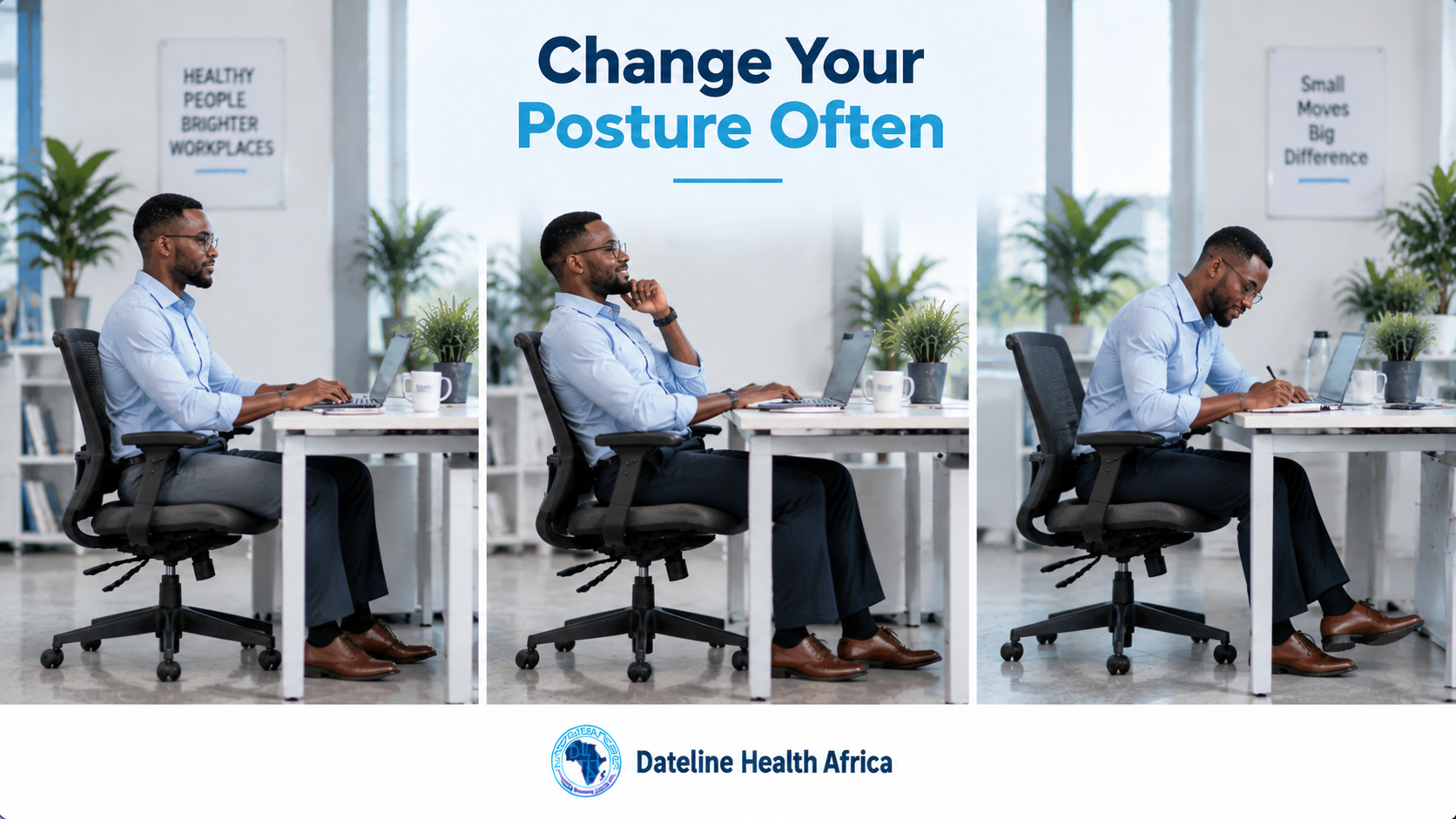
Image of an African male office worker shown as sitting in different positions to emphasize the importance of changing posture instead of staying in one position for long periods. Credit: Chat GPT
You've probably heard that sitting with "perfect posture" will protect your back. But it's not quite that simple.
Rather than trying to hold one ideal posture for hours, give yourself opportunities to change position.
As Uschold explains, "It's less about finding the "right" posture and more about movement and giving yourself opportunities to change position”.
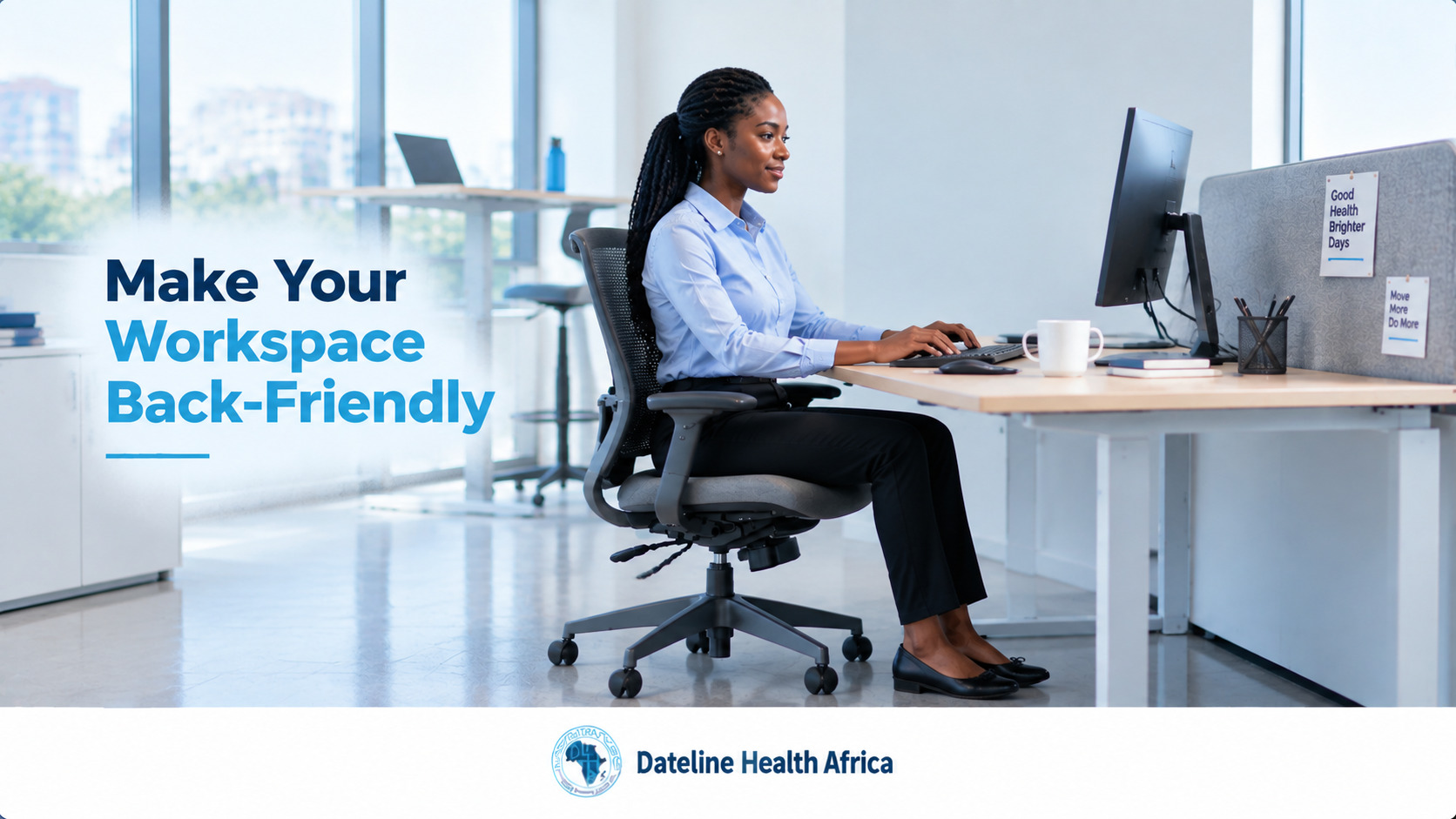
Image of an African female office worker seated at a comfortable workspace with a supportive chair and desk, creating a healthier back-friendly working environment. Credit: Chat GPT
Your workstation matters, particularly if you spend hours working or studying at a desk (2).
Aim for a comfortable setup where:
But remember, even a well-adjusted workstation doesn't mean you need to stay in one position for long periods. Changing positions and taking movement breaks throughout the day are still important.
Research suggests that physical activity, movement strategies and ergonomic adjustments may all have a role in managing back pain, but no single approach works for everyone (3).

Image of an African woman walking outdoors while others exercise nearby, highlighting the importance of regular physical activity in a healthier daily routine. Credit: Chat GPT
Staying physically active helps protect your back too. A systematic review found that exercise lowers the risk of getting new episodes of low back pain by 35%. (4)
The World Health Organization (WHO) recommends that adults aim for: (5)
Don’t forget that even if you do regular exercise, it is still important to take movement breaks throughout the day.
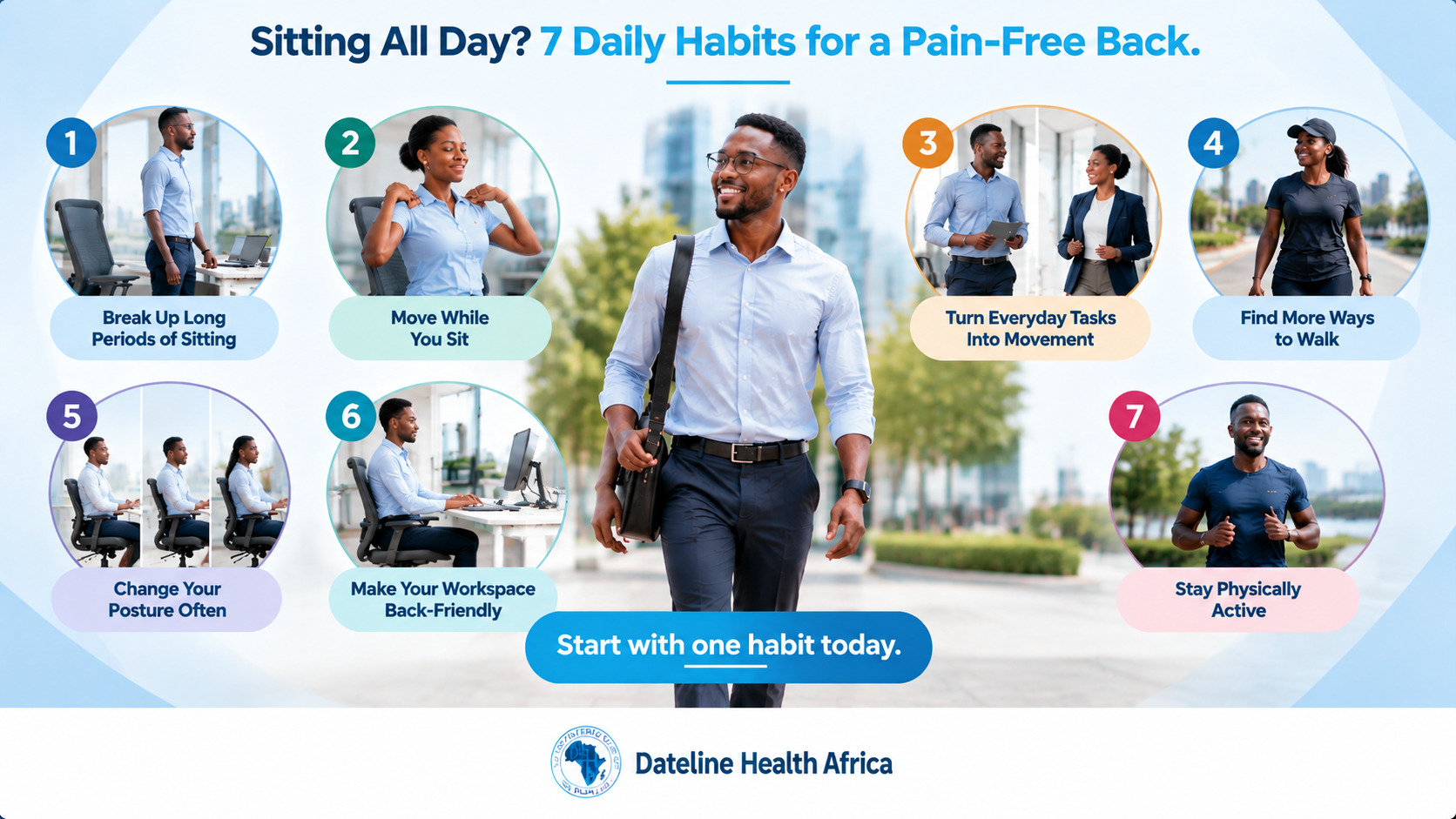
Infographic demonstrating seven daily habits, including movement breaks, walking, posture changes, and physical activity for a healthier pain-free back. Credit: Chat GPT
A healthier back isn't about avoiding sitting completely. It's more about breaking up long periods of sitting, switching your posture and finding more opportunities to move throughout the day.
These small habits may seem insignificant on their own, but together, they can make your daily routine more active. You don't need to change everything at once. Start with one habit that feels realistic for you, then gradually make it part of your daily routine.
1. Sortino M, Trovato B, Zanghì M, Roggio F, Musumeci G. Active Breaks Reduce Back Overload during Prolonged Sitting: Ergonomic Analysis with Infrared Thermography. J. Clin. Med. 2024;13(11):3178. Doi: 10.3390/jcm13113178. Available from here.
2. Government of Canada CC for OH and S. CCOHS: Working in a Sitting Position - Good Body Position [Internet]. 2025 August 28 [Cited 2026 Sept 7]. Available from here.
3. Ismiyasa SW, Zahari Z, Azizan A, Faidullah HZ. Current concepts in the conservative interventions for office workers with low back pain: A scoping review. Journal of Orthopaedic Reports 2026; 5(4):100958. Available from here.
4. Steffens D, Maher CG, Pereira LSM, Stevens ML, Oliveira VC, Chapple M, et al. Prevention of Low Back Pain: A Systematic Review and Meta-analysis. JAMA Intern Med [Internet]. 2016 [cited 2026 Sept 7]; 176(2):199. Available from here.
WHO guidelines on physical activity and sedentary behaviour [Internet]. 25 November 2020. [Cited 2026 Sept 7]. Available from here.
Published: September 10, 2026.
© 2026. Datelinehealth Africa Inc. All rights reserved.
Permission is given to copy, use and share content for non-commercial purposes without alterations or modifications and subject to source attribution.