How Stress Affects Your Period (With Coping Tips)
By Kelechi Nwaowu, BNSc, RN, RM, Freelance Medical & Health Writer. Medically reviewed by E. Odekina, MB.BS.
August 1, 2026
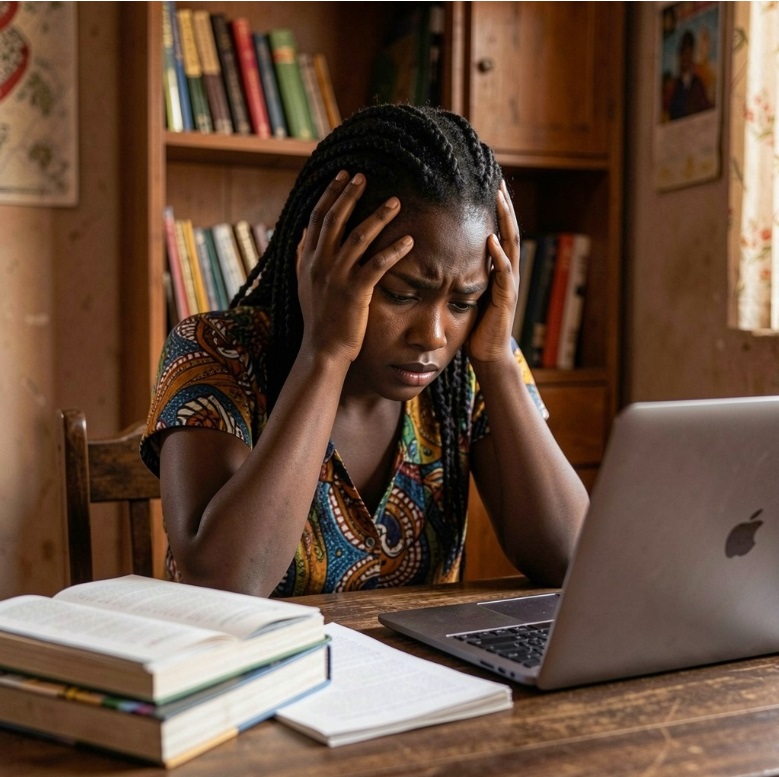
A young Nigerian woman sitting alone at a table, looking at a laptop with her head resting in her hands. She is surrounded by textbooks and looks visibly overwhelmed. Magnific
Imagine Chisom, a 19-year-old Nigerian teenager preparing for her university entrance (JAMB) examination. She studied late into the night, skipped outings with friends, and is awake at 4 a.m. most mornings to study more. A few weeks before the examination, the date she expected her period passed without any sign of it.
She panicked and took a home pregnancy test, but the result was negative. She searched online for possible reasons and became even more worried. A few weeks after the examination, her period returned as though nothing had happened.
Chisom's story is common among many menstruating girls and women across many sub-Saharan African countries. Stress is one of the most common causes of temporary changes in the menstrual cycle. Yet many women do not realise that stress can affect their periods. Instead, they spend days or even weeks worrying that something is seriously wrong.
If you've ever noticed your period arriving late, coming earlier than expected, becoming heavier or lighter, or stopping during a particularly stressful time, you are not alone. This article explains:
Before understanding how stress affects your period, it helps to know what makes a healthy, regular menstrual cycle.
The menstrual cycle is controlled by hormones released by three important parts of the body: the hypothalamus (a small region of the brain), the pituitary gland (a small gland at the base of the brain), and the ovaries (the organs that produce eggs and the hormones oestrogen and progesterone), Fig. 1.
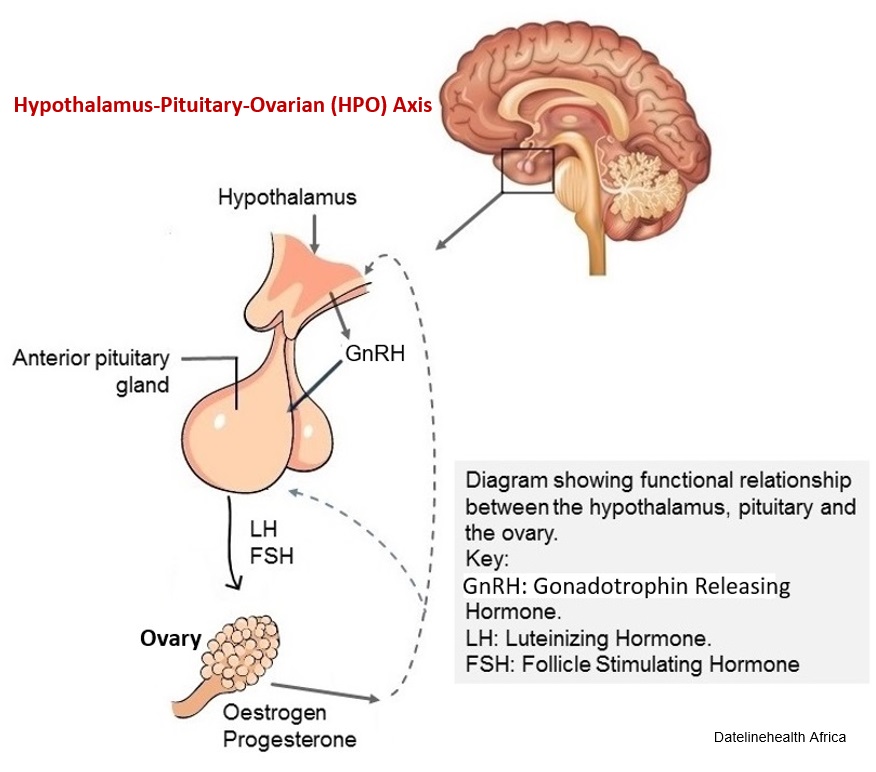
Fig. 1: Illustration of the structural components and functional relations of the HPO axis. Click on image to enlarge.
Together, these structures form the hypothalamic-pituitary-ovarian (HPO) axis (1). They work as a team to regulate the menstrual cycle each month.
At the beginning of the menstrual cycle, the hypothalamus signals the pituitary gland, which then releases hormones that help an egg grow and mature in the ovary. Around the middle of the cycle, another hormonal signal triggers the release of the mature egg, a process called ovulation (1).
After ovulation, the ovary produces progesterone, a hormone that prepares the lining of the womb for pregnancy. If pregnancy does not occur, progesterone levels fall, the lining of the womb is shed, and menstruation begins (1). The cycle then starts all over again.
For the menstrual cycle to remain regular, the brain and ovaries must communicate with each other through these hormonal signals. Stress can interfere with this communication, disrupting the normal cycle and leading to changes in the timing or pattern of menstrual periods.
A regular menstrual cycle usually occurs every 24 to 38 days, lasts up to 8 days, and follows a fairly consistent pattern from month to month (1). However, a "regular" period does not look the same for every woman. What matters most is that your menstrual cycle is usually predictable for you.
It is also normal for your cycle to vary slightly from one month to another (1). A period that comes a few days earlier or later than expected is usually not a cause for concern.
However, if your periods suddenly become much later than usual, stop completely, become much heavier or lighter, or change in ways that are unusual for you, it is important to pay attention and seek medical advice if the changes persist.
For answers to common questions about menstruation, see: 12 Frequently Asked Menstruation Questions and Answers for Africans to Know
Stress affects more than your thoughts and emotions. It also triggers hormonal changes that can disrupt the menstrual cycle.
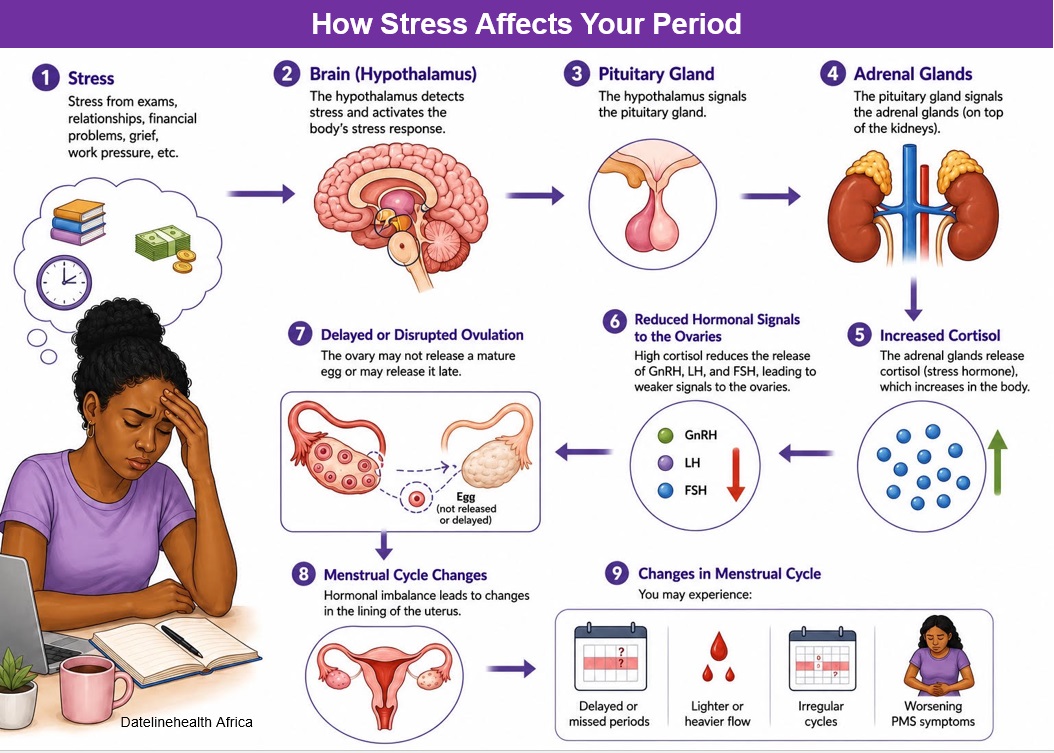
A simplified infographic illustration showing how stress activates the brain's responses; increases cortisol production, disrupts the hormonal signals that regulate ovulation and menstruation. Fact-checked for medical accuracy. AI-generated: ChatGPT. Click on image to enlarge.
When the brain senses a stressful situation, whether it is preparing for an important examination, struggling with financial difficulties, grieving the loss of a loved one, or dealing with relationship problems, it activates the body's stress response.
The body's stress response is controlled by a communication system called the hypothalamic-pituitary-adrenal (HPA) axis. The hypothalamus (a small region of the brain) signals the pituitary gland (a small gland at the base of the brain), which then tells the adrenal glands (located above the kidneys) to release cortisol, often called the body's stress hormone (2).
Cortisol helps the body cope with challenges. It increases alertness, raises blood sugar to provide energy, and prepares the body to react quickly (2). These changes are normal and help protect the body during stressful situations.
However, when stress continues for weeks or months, cortisol levels remain high. This is when stress begins to affect other body systems, including the reproductive system.
As explained earlier, the menstrual cycle relies on the hypothalamic-pituitary-ovarian (HPO) axis (see fig. 1), a communication system between the brain and the ovaries that regulates ovulation.
When cortisol remains elevated for long periods, it can suppress the HPO axis. Specifically, it reduces the release of gonadotropin-releasing hormone (GnRH) from the hypothalamus (3). This, in turn, lowers the release of follicle-stimulating hormone (FSH) and luteinising hormone (LH) from the pituitary gland (3).
Without enough FSH and LH, the ovaries may not mature or release an egg as they normally would. Without ovulation, the hormonal changes needed for a regular menstrual cycle do not occur, causing periods to become delayed, irregular, lighter or heavier than usual, or to stop temporarily.
In simple terms, when the body is under significant or prolonged stress, it temporarily prioritises survival over reproduction. As a result, the menstrual cycle is often one of the first body systems to be affected.
To learn about other hormonal conditions that affect women, see 10 Common Hormone-Linked Disorders in African Women.
Stress can affect the menstrual cycle in different ways. Some women experience delayed or missed periods, while others notice heavier or lighter bleeding, more painful periods, or worsening premenstrual symptoms. These changes vary from one woman to another.
Below are some of the most common menstrual changes linked to stress.
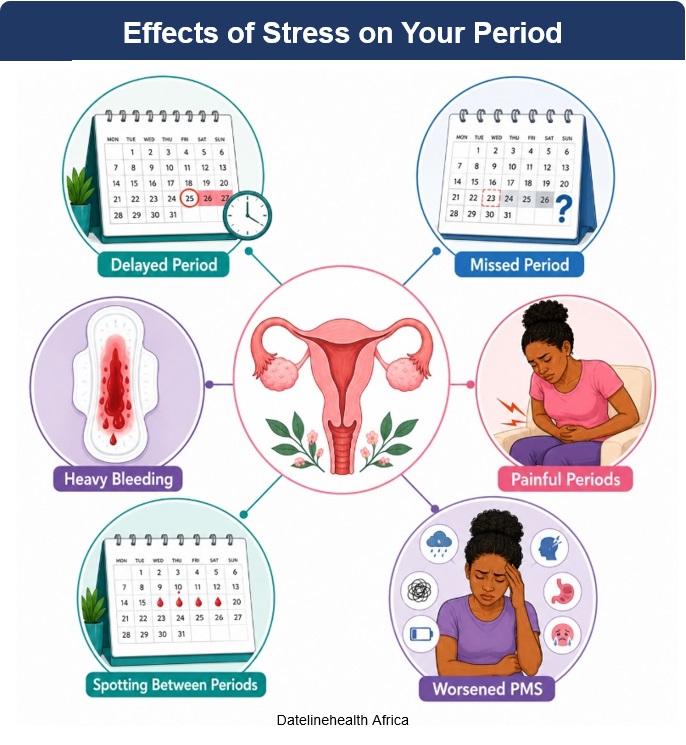
An Info-poster showing the common menstrual changes linked to stress. AI generated: ChatGPT. Click on image to enlarge.
1. Delayed or Missed Periods
One of the most common effects of stress on the menstrual cycle is a delayed or missed period. A 2024 massive study published in Neuroscience & Biobehavioral Reviews found that most of the studies analysed reported a significant association between psychological stress and changes in menstrual cycle timing (4).
In some women, prolonged or severe stress can lead to a condition called functional hypothalamic amenorrhoea (FHA). This occurs when stress suppresses the hypothalamic-pituitary-ovarian (HPO) axis, causing menstrual periods to stop for months without any underlying structural problem affecting the reproductive organs (5).
FHA is the most common cause of secondary amenorrhoea, which is the absence of menstrual periods for three months or more in a woman who previously had regular cycles (5).
The good news, however, is that functional hypothalamic amenorrhoea is usually reversible. When the source of stress is reduced or addressed, and normal hormonal function returns, menstrual periods often resume (5).
2. Heavier or More Painful Periods
Stress does not always delay a period. In some women, it can make menstrual bleeding heavier or more painful.
One reason for this is that stress can increase the body's inflammatory response, which may affect prostaglandin production (6). Prostaglandins are hormone-like substances produced by the lining of the uterus that help it contract during menstruation. When prostaglandin levels are higher than usual, the uterus contracts more strongly, which can lead to more painful menstrual cramps and, in some women, heavier bleeding (6).
Research also suggests that the timing of stress matters. A 2004 study published in Occupational and Environmental Medicine found that women who experienced higher levels of stress during their follicular phase (the first half of the menstrual cycle, which begins with menstruation and ends with ovulation) were more likely to report painful periods than those with lower stress levels (7).
3. Shorter Cycles and Spotting Between Periods
During stress, some women notice that their periods arrive earlier than expected or experience light bleeding between periods (spotting).
These changes can occur because stress-related hormonal changes may disrupt the normal balance between oestrogen and progesterone (5). When this balance is disturbed, the lining of the uterus may begin to shed earlier than expected or in an irregular pattern, resulting in shorter or longer cycles and spotting (1).
Although stress can contribute to spotting, it is not the only possible cause. Spotting may also result from hormonal contraceptives, pregnancy, infections, or other medical conditions. If it persists or occurs repeatedly, it is important to seek medical advice.
4. Increased Premenstrual Syndrome (PMS)
Premenstrual syndrome (PMS) refers to a group of physical, emotional, and behavioural symptoms that occur days to weeks before menstruation (8). Common symptoms include bloating, breast tenderness, mood swings, irritability, headaches, fatigue, and food cravings. PMS affects nearly half of women of reproductive age worldwide (9).
A 2023 study of 198 female participants showed that increased stress worsens PMS symptoms (8).
For many women, this creates a difficult cycle. For instance, stress worsens PMS symptoms, and more severe PMS symptoms can, in turn, increase stress, especially when they interfere with work, school, or daily activities.
To learn more about menstrual health challenges affecting women in Africa, see: Menstrual Health Issues in Sub-Saharan Africa: An Overview.
Stress can affect the menstrual cycle in different ways. These period changes depend on the type of stress, its severity, and how long it lasts.
Below are some of the most common sources of stress that can affect your menstrual cycles.
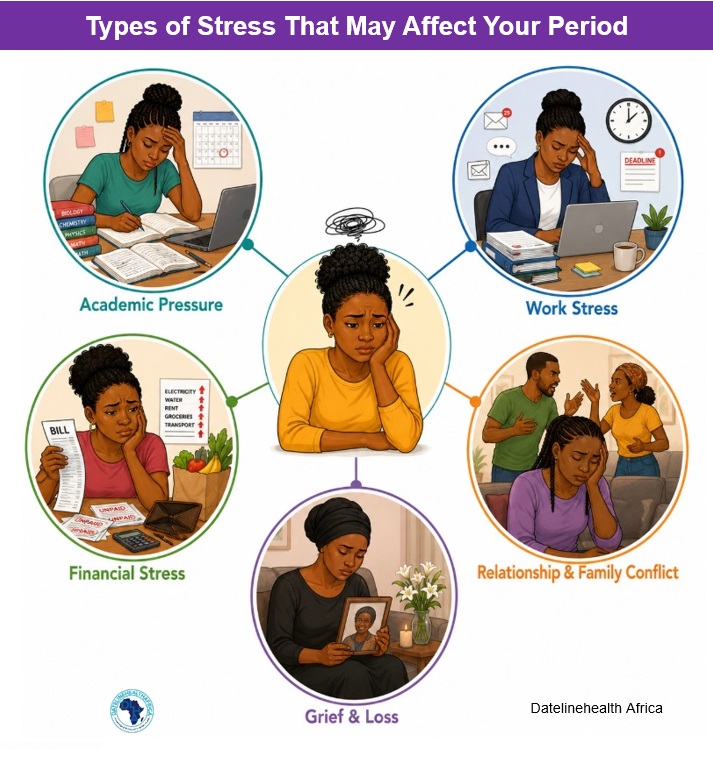
Info-poster showing common sources of stress that may affect women. AI generated: ChatGPT. Click on image to enlarge.
1. Academic and Career Pressure
Preparing for important examinations, such as internal or external school/college examinations, professional licensing or job promotion-related examinations, can be extremely stressful.
In these situations, people spend long hours studying, sleep less than usual, skip meals, and worry about their performance. These factors can place the body under prolonged stress, increasing cortisol levels and disrupting the menstrual cycle.
Young professionals may experience similar challenges. Starting a new job, adjusting to a national service program posting in an unfamiliar community, coping with demanding workloads, or worrying about job security can all create ongoing stress that may affect menstrual regularity.
Financial difficulties are another common source of stress. Worrying about paying rent, paying for food, meeting school fees, supporting family members, or running a business can create constant anxiety.
Unlike a short-lived stressful event, financial pressure often lasts for weeks or months. This prolonged stress can keep cortisol levels elevated, increasing the likelihood of changes in the menstrual cycle.
Conflict with a spouse, partner, family member, or close friend can also affect menstrual health. Ongoing arguments, emotional abuse, family responsibilities, or caring for a sick relative are examples of situations that can place a significant burden on women.
Also, women in many African communities are often expected to manage family challenges quietly without expressing how overwhelmed they feel. Carrying this burden over time can increase stress and contribute to menstrual changes.
Losing a parent, partner, child, close relative, or close friend is one of the most stressful experiences a person can face. Grief activates the body's stress response and, for many people, the effects can last for months.
During this time, some women notice that their periods become delayed, irregular, heavier, lighter, or stop temporarily. These changes may occur soon after the loss or develop gradually as the effects of grief continue.
Stress is a common cause of menstrual changes, but it is not the only one. Irregular, missed, or unusually heavy periods can also be caused by other medical conditions. Knowing when to seek medical care is important because some of these conditions require specific treatment.
Other Conditions That Can Affect Your Period
Several medical conditions can cause changes similar to those caused by stress.
One of the most common is polyendocrine metabolic ovarian syndrome (PMOS). Just like stress, PMOS can cause irregular or missed periods.
However, women with PMOS may also have symptoms such as persistent acne, excess facial or body hair, unexplained weight changes, or difficulty becoming pregnant. If these symptoms occur alongside menstrual changes, PMOS may be the cause instead of, or in addition to, stress.
To learn more, see PMOS in Africa: Early Signs, Root Causes and Diagnosis
Other conditions that can disrupt the menstrual cycle include (1):
You should see a doctor if:
Your doctor will ask about your symptoms, menstrual history, and general health before deciding which tests you may need. Depending on your symptoms, they may recommend blood tests to check your hormone levels or an ultrasound scan to look for conditions such as PMOS, fibroids, or other problems affecting the reproductive organs.
These tests help identify the underlying cause and guide the most appropriate treatment.
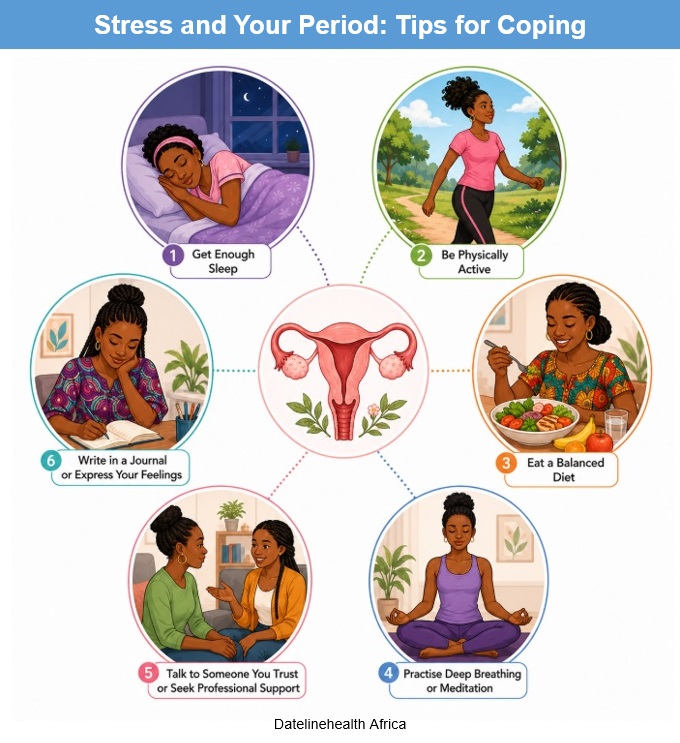
An Info-poster showing practical ways to manage stress, including sleeping well, exercising, eating healthy meals, relaxing, talking to someone, and seeking professional support. AI generated: ChatGPT. Click on image to enlarge.
The good news is that stress-related changes to the menstrual cycle are usually temporary. As stress is managed and hormone levels return to normal, the cycle often becomes regular again.
While it may not always be possible to remove the source of stress, the following practical steps can help:
Managing stress is one of the best ways to reduce its effects on your menstrual cycle. Although you may not be able to avoid stressful situations such as examinations, financial difficulties, or family responsibilities, finding healthy ways to cope can make a difference.
Some simple strategies include:
These activities can help reduce stress and improve overall well-being.
Healthy daily habits can also help your body recover from stress and support a healthy menstrual cycle. These include:
Sometimes, stress becomes too overwhelming to manage alone. If you are struggling with prolonged stress, anxiety, grief, or relationship problems, consider speaking with a mental health professional.
Counselling or psychotherapy can help you develop healthier ways to cope with stress. One form of psychotherapy, called cognitive behavioural therapy (CBT), has been shown to help women whose menstrual changes are linked to long-term stress (5).
You can access these mental health services in many African countries through public hospitals, private clinics, community organisations, and online counselling platforms. If you are unsure where to start, speak with your doctor or another trusted healthcare professional for guidance.
Seeking professional support is not a sign of weakness. It is an important step towards improving your mental well-being and supporting your overall health.
Your menstrual cycle is more than a monthly reproductive process. It also reflects what is happening in your body, including how you respond to stress. When stress becomes prolonged, it can disrupt the hormonal signals that regulate your menstrual cycle, leading to changes such as delayed periods, missed periods, heavier bleeding, or more painful menstruation.
Fortunately, these changes are often temporary. As stress reduces and the body's hormone levels return to normal, the menstrual cycle usually becomes regular again. However, if your periods remain irregular, stop for three months or longer, become unusually heavy, or are accompanied by severe pain or other concerning symptoms, it is important to see a healthcare professional to rule out other possible causes.
References:
Published: August 1, 2026
© 2026. Datelinehealth Africa Inc. All rights reserved.
Permission is given to copy, use, and share content freely for non-commercial purposes without alteration or modification and subject to attribution as to source.
DATELINEHEALTH AFRICA INC., is a digital publisher for informational and educational purposes and does not offer personal medical care and advice. If you have a medical problem needing routine or emergency attention, call your doctor or local emergency services immediately, or visit the nearest emergency room or the nearest hospital. You should consult your professional healthcare provider before starting any nutrition, diet, exercise, fitness, medical or wellness program mentioned or referenced in the DatelinehealthAfrica website. Click here for more disclaimer notice.